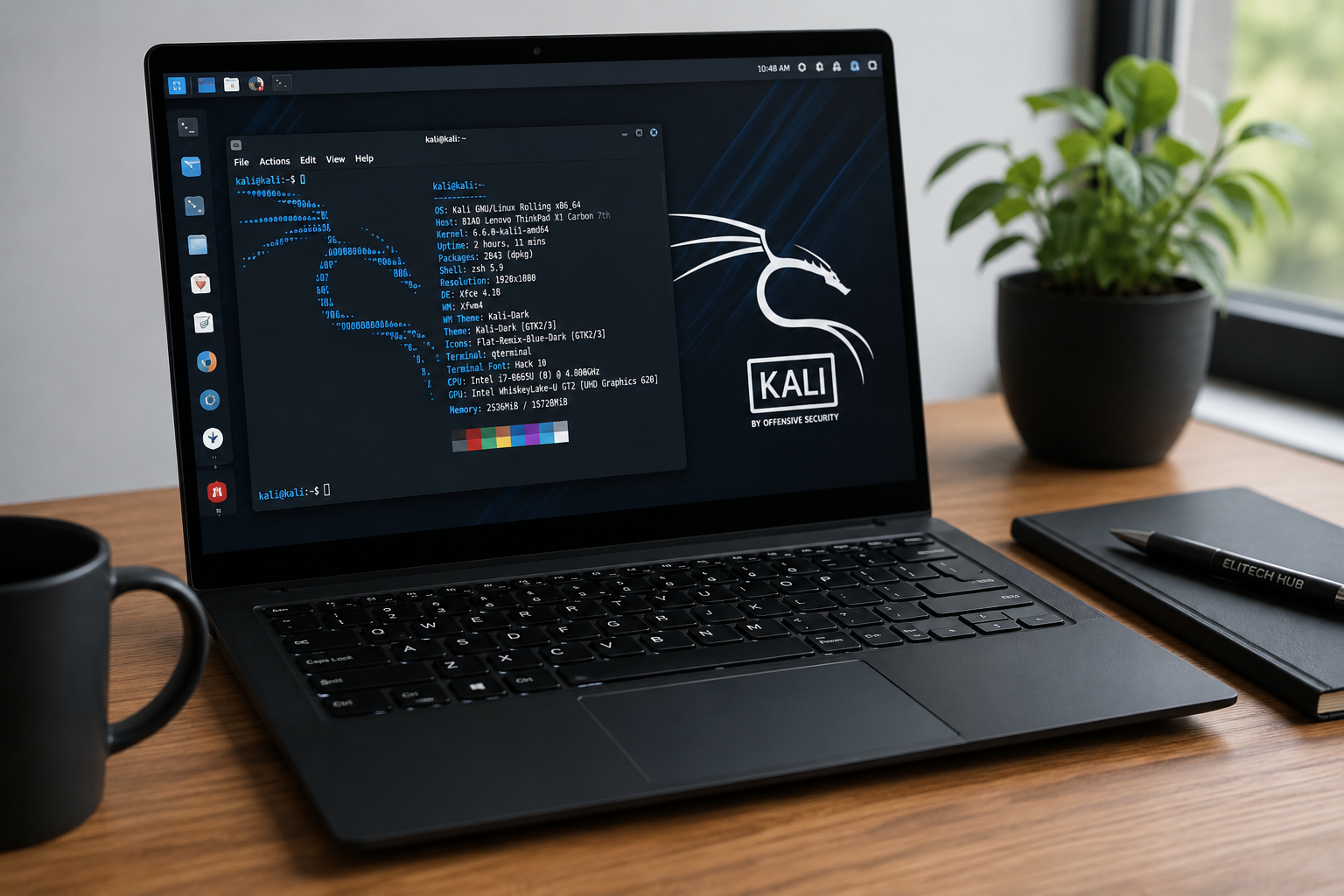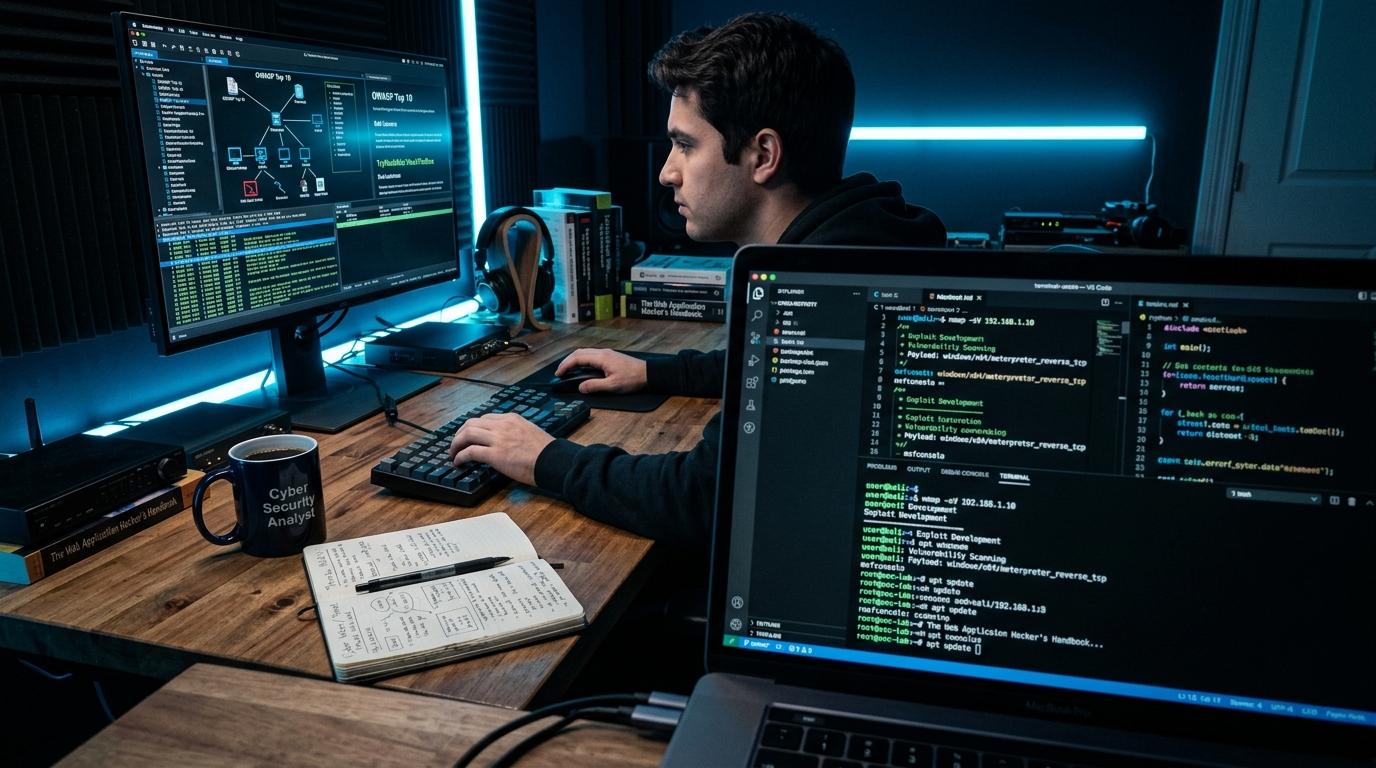
If you're in Nigeria and you've started looking into cybersecurity, you've probably already asked the one question everyone asks me first: "What laptop do I need?"
And if you've searched online before landing here, you've probably seen people recommending 32GB RAM, Core i9 processors, RTX graphics cards and price tags that make you close the tab immediately.
Let me clear that up right away, because I see this discourage students before they've even started: you do not need a ₦2 million laptop to begin learning cybersecurity. You don't even need a brand-new one.
I know this because I've watched it work. I've used a Lenovo ThinkPad T470s — Core i7, 8GB RAM, 256GB SSD — for server-related work, and it performed well. The limitation was never that it couldn't run the software. It got uncomfortable only when I pushed several demanding applications or virtual machines at once. That's a very different problem from "this laptop can't do the job."
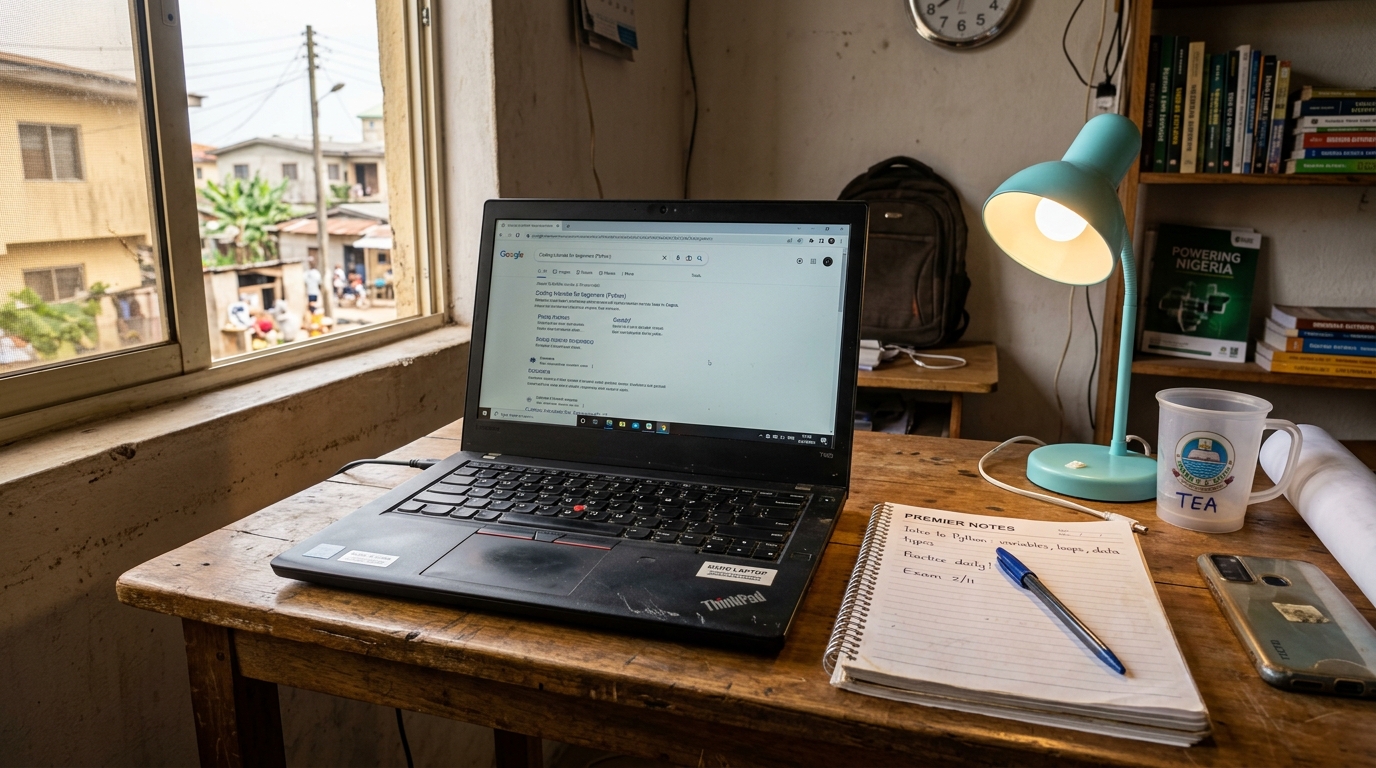
That distinction matters. Your first cybersecurity laptop doesn't need to power an entire corporate security lab. It just needs to be good enough for you to start.
This piece is part of a broader guide — see Best Laptops for Cybersecurity in 2026: Beginner to Professional Guide for the full picture. If your budget is in dollars or pounds rather than naira, I've written a separate guide covering premium cybersecurity laptops for heavier, professional-grade workloads — worth a look once you've outgrown this one. And if you want to go deeper on a specific tier, see Best Laptops for Cybersecurity Under ₦300,000 in Nigeria and Best UK-Used Laptops for Cybersecurity in Nigeria.
What to actually look for
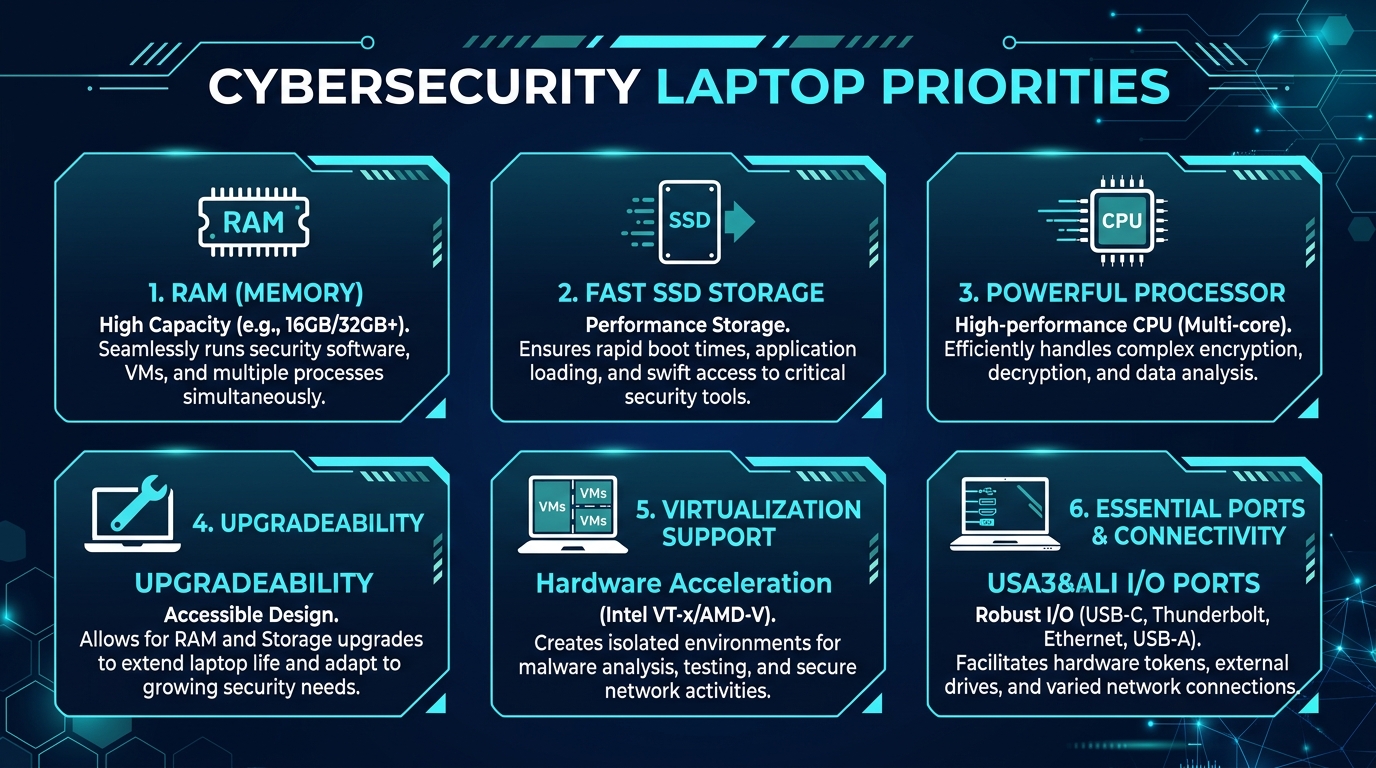
If you're buying specifically to learn cybersecurity, here's where I'd put your money, in order of priority:
1. RAM — more important than chasing the "Core i7" label. Aim for 16GB if your budget allows it. 8GB works, especially early on, but you'll feel the ceiling sooner than you'd like.
2. SSD — avoid an old laptop with a mechanical hard drive if you can help it. 256GB is usable; 512GB is a real upgrade in comfort.
3. Processor — a reasonably modern Core i5 or Ryzen 5 is already enough for a beginner. Don't assume an older Core i7 beats a newer Core i5 — generation matters more than the number after "i."
4. Upgradeability — a laptop you can bump from 8GB to 16GB or 32GB later is often a smarter buy than a slightly faster machine with soldered-in memory you're stuck with forever.
5. Virtualization support — you'll eventually run virtual machines, so look for Intel VT-x/VT-d or AMD's equivalent virtualization features.
6. Ports — don't underestimate this. USB-A, USB-C, HDMI, and Ethernet all become genuinely useful once you're working with networking and hardware.
If your budget is around ₦250,000
This is where I'd strongly steer you toward a UK-used business laptop over a brand-new one.
At this price point, a new laptop looks attractive, but you almost always pay for that "new" label with a weaker processor. Current Nigerian listings show machines like the Dell Latitude 3190 — 8GB RAM, 128GB or 256GB SSD — around ₦250,000. The catch is the Pentium-class processor inside it, which isn't what I'd choose for serious cybersecurity learning. You can do basic computing on it, but a used business laptop will take you further for the same money.
At this budget, keep an eye out for:
Lenovo ThinkPad T490s
Lenovo ThinkPad X280
Lenovo ThinkPad T470/T470s
Dell Latitude 5400
HP EliteBook 840 G6
I've seen a UK-used ThinkPad T490s (Core i5, 8GB RAM, 256GB SSD) listed around ₦250,000, and a ThinkPad X280 with an 8th-gen Core i5, 8GB RAM, and 256GB SSD at roughly the same price. At this budget, I'd rather have an older business-class Core i5 with an SSD than a brand-new low-end laptop that's only appealing because the box is unopened.
If you have around ₦300,000
Now it gets more interesting. Start looking for:
Core i5, 8th generation or newer
16GB RAM
256GB or 512GB SSD
A ThinkPad T470 with 16GB RAM and a 256GB SSD has recently been listed around ₦300,000 in Abuja. If you find a T490/T490s, Latitude 5400, or EliteBook 840 G6/G7 near this price with 16GB RAM and a healthy SSD, take it seriously.
One thing I'll repeat to every student who asks: the exact condition matters more than the model number. Don't buy the name on the lid. A badly treated T490 can be a worse purchase than a clean, well-maintained T480.
If you have ₦350,000 to ₦450,000
This is where I'd start looking for a proper 16GB machine with a 512GB SSD.
Some current listings show Dell Latitude 5400 configurations (Core i5, 16GB RAM, 512GB SSD) around ₦420,000–₦450,000. HP EliteBook 840 G6 listings sit around ₦380,000, though configurations vary a fair amount.
At this budget, target:
Core i5, 10th generation or better
16GB RAM
512GB NVMe SSD
Full HD display
Good battery condition
Upgradeable components where possible
This is a genuinely comfortable starting point for cybersecurity work — not just "good enough," but a setup you won't outgrow quickly.
What about ₦500,000 and above?
Here you can start looking at newer business laptops:
ThinkPad T14 / T14 Gen 2
HP EliteBook 840 G7/G8
Dell Latitude 5410/5420
Newer Ryzen-based ThinkPads
Exact pricing depends heavily on whether the machine is new, refurbished, or UK-used. But I'd still take a well-specced business laptop over a consumer laptop with flashy specs that don't actually help your security work.
My recommended Nigerian buying tiers
| Budget | What I'd target | Cybersecurity suitability |
|---|---|---|
| ₦200K–₦250K | Older business laptop, preferably SSD | Beginner |
| ₦250K–₦300K | 8th-gen Core i5, 8GB–16GB, SSD | Good starting point |
| ₦300K–₦400K | 8th–10th-gen Core i5/i7, 16GB, SSD | Very good |
| ₦400K–₦500K | 10th-gen+ Core i5/Ryzen 5, 16GB, 512GB SSD | Excellent |
| ₦500K+ | Newer T14/EliteBook/Latitude or similar | Excellent |
These are target ranges, not fixed prices — the Nigerian laptop market shifts constantly, and UK-used machines vary a lot by condition, RAM, SSD, battery health, and seller reputation.
New or UK-used? This is the part that actually matters most.
If you have ₦250,000 and someone offers you a brand-new laptop with an entry-level processor, don't assume you're getting the better deal by default.
A clean UK-used ThinkPad, Latitude, or EliteBook can hand you considerably more computing capability for the same money. Business laptops shine on the used market precisely because they were built for organizations first — better keyboards, more useful ports, sturdier chassis, and often better upgrade paths than a lot of cheap consumer laptops.
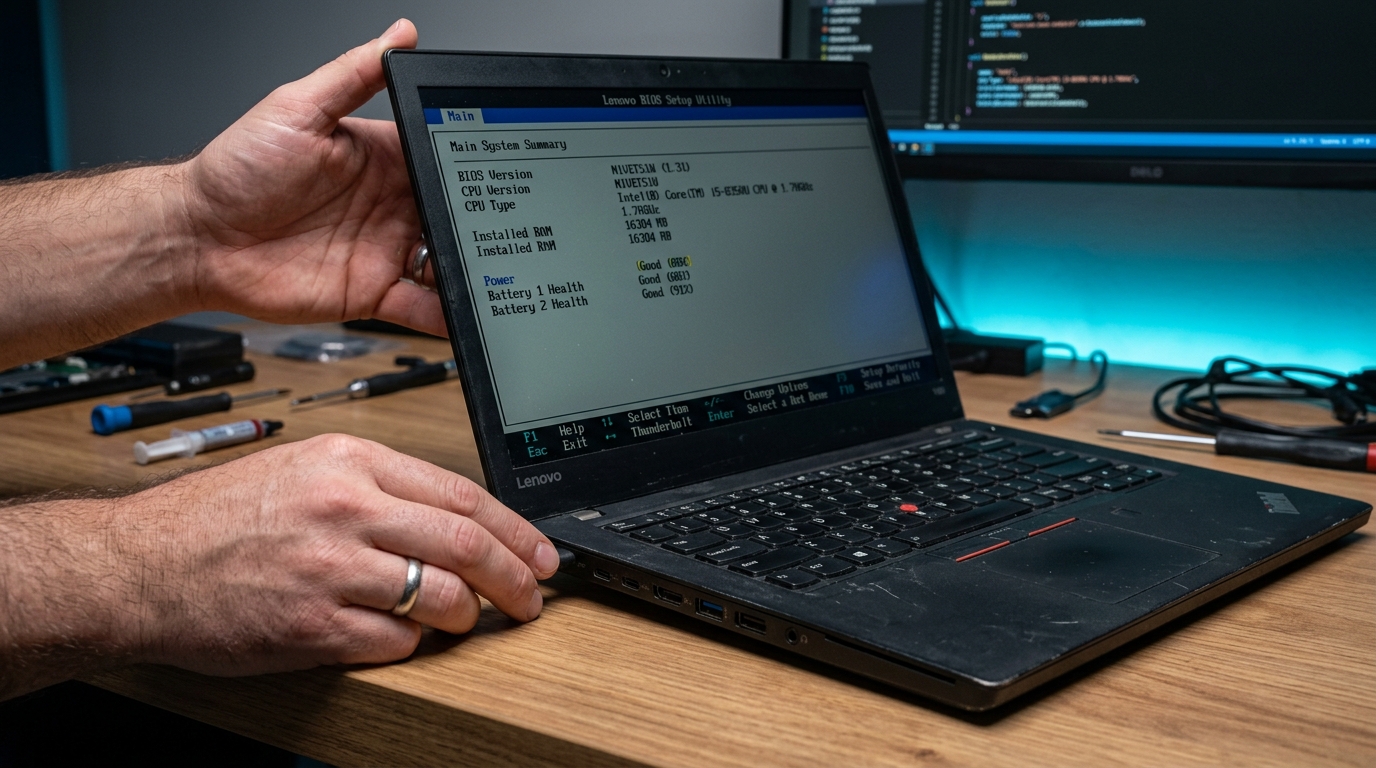
But there's a catch: inspect before you pay. Every single time. Check:
Battery health
Screen
Keyboard
Trackpad
USB ports
USB-C charging
HDMI
Wi-Fi
Speakers
Webcam
SSD health
RAM
BIOS password
Charger
Serial number
Overall physical condition
And don't let a seller convince you that "Core i7" tells you everything you need to know. Ask for the exact processor model — a 7th-generation Core i7 is not automatically better than a 10th-generation Core i5.
Can 8GB RAM really run cybersecurity tools?
Yes — but there's a real difference between running cybersecurity software and running a cybersecurity laboratory.
With 8GB, you can comfortably learn Linux, networking, Python, PowerShell, and most cybersecurity fundamentals. Tools like Wireshark, Nmap, and Burp Suite run fine. You can run a single virtual machine without much drama.
Where it gets tight is stacking several things at once — a Windows 11 VM, a Kali Linux VM, an Ubuntu server, an Active Directory environment, Docker containers, your browser, VS Code, and Wireshark, all running together. That's where 16GB starts feeling much more comfortable, and 32GB becomes genuinely nice to have.
So if your current laptop has 8GB, don't let that discourage you. Start there. Upgrade when you actually hit the ceiling — not before.
You don't need Kali Linux to start
One more misconception I hear constantly: that starting cybersecurity means installing Kali Linux on day one. It doesn't.
You can start with Windows and use virtual machines or WSL where it makes sense. You can install Ubuntu or another distribution just as easily. What actually matters is understanding what you're doing — not how many tools you've collected.
A powerful laptop doesn't make someone a cybersecurity professional. Knowledge does. Your laptop is just the lab you practice in.
My honest recommendation
If you're a Nigerian student starting cybersecurity today with around ₦250,000, I wouldn't tell you to wait until you can afford a ₦1 million machine. I'd look for a clean UK-used business laptop — a ThinkPad, Latitude, or EliteBook with a decent Core i5, 8GB or preferably 16GB RAM, and a 256GB or 512GB SSD within budget.
With ₦300,000–₦400,000, I'd put extra weight on getting to 16GB RAM. With ₦500,000 or more, I'd look for a newer-generation machine rather than the oldest laptop wearing a Core i7 badge.
And if you already own something like an older ThinkPad with an SSD — don't assume you need to replace it just because you're starting cybersecurity. Try it first. You might be surprised by what it can already do.