Schools once worried about physical safety. Now, they also have to worry about digital safety. This places the learning ecosystem at the core of the human side of cybersecurity.
A major cyberattack involving Canvas LMS, one of the world’s most widely used online learning platforms, is making headlines—and for good reason. The platform, owned by Instructure, is used by universities, colleges, and K-12 schools across the world. For millions of students and teachers, Canvas is part of everyday life:
- Submitting assignments
- Writing exams
- Checking grades
- Receiving announcements
- Communicating with teachers
It is the digital classroom.
And now, that classroom may have been breached.
A hacker group known as ShinyHunters reportedly gained unauthorised access connected to the platform, raising concerns about student data, school systems, and the growing vulnerability of digital education.
At first glance, this sounds like another “tech story". It’s not. This is about trust, privacy, and the uncomfortable reality that schools are becoming targets in the modern cybercrime economy.
What Happened?
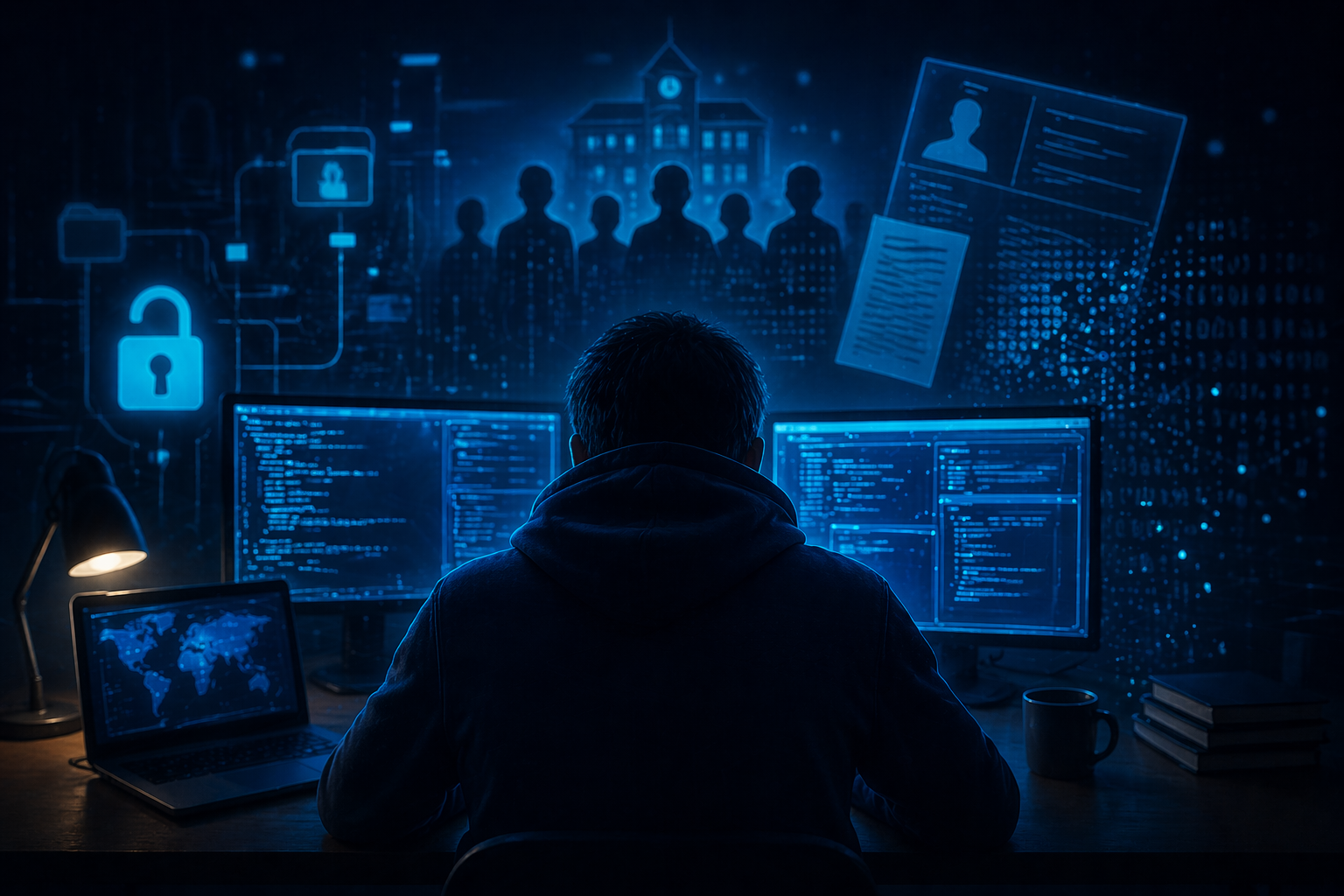
Imagine someone secretly entering a school’s administrative office after hours. Not to vandalise it.
Not to steal furniture. But to quietly go through student records, communication files, and confidential information. That is essentially what a cyber breach does—digitally. Canvas LMS is an online platform that schools use to organise learning. Think of it as a virtual school building where:
- Teachers upload coursework
- Students submit assignments
- Grades are stored
- Messages are exchanged
The alleged breach means hackers may have gained access to sensitive information connected to that system. Now, cybersecurity investigations are often complicated, and not every detail is immediately public. However, the bigger issue is not just what was accessed.
It’s what this incident represents.
Schools are no longer just places of learning.
They are massive digital ecosystems storing enormous amounts of personal information.
And cybercriminals know it.
Why This Matters to Regular People
This exposes the human side of cybersecurity. You do not need to work in technology to care about this story. This concerns you if you are:
- A student
- A parent
- A teacher
- Or simply someone whose information exists online
1. Student Data Is Deeply Personal
Educational platforms often store:
- Full names
- Email addresses
- Academic records
- Assignment history
- Login credentials
People tend to think student information is harmless. It’s not. To cybercriminals, data is valuable—especially when it belongs to millions of users.
2. Schools Depend Heavily on Digital Platforms
Education has changed dramatically over the past few years.
Many schools now rely on online systems for nearly everything:
- Classes
- Communication
- Testing
- Administration
When a platform like Canvas experiences a breach, the effects can ripple across entire institutions.
Classes may be disrupted.
Communication may break down.
Trust may erode.
3. Young People Are Becoming Cybercrime Targets
Cybercriminals are no longer focused only on banks and corporations.
Educational institutions are attractive targets because:
- They store large amounts of data
- Security systems are often underfunded
- Students are less likely to recognise cyber threats
That makes schools vulnerable in ways many people underestimate.
4. Convenience Comes With a Cost
Digital learning platforms made education easier and more accessible.
But convenience has a trade-off. When millions of students use the same system, enormous amounts of sensitive information become centralised in one place. And wherever large amounts of data exist, cybercriminals will follow.
The Bigger Problem Behind the Canvas Breach
This story is not only about one platform. It reflects a larger shift happening quietly across society:
Our schools, workplaces, hospitals, and daily lives are becoming increasingly digital. But while technology is evolving quickly, cybersecurity awareness is not always evolving at the same pace. Many institutions are still trying to catch up. And cybercriminals know it.
What This Says About the Future of Education
The classroom is no longer limited to four walls. Today, education exists online – in portals, on apps, across cloud systems, and through digital communication tools. That reality creates incredible opportunities—but also new risks. Schools are now responsible not only for protecting students physically but also digitally.
And that responsibility will only become more important in the years ahead.
How Students and Parents Can Protect Themselves
While individuals cannot stop large-scale cyberattacks alone, awareness still matters.
Simple habits can reduce risk significantly:
- Use strong and unique passwords
- Avoid sharing login details
- Enable two-factor authentication where possible
- Be cautious of suspicious emails or messages
- Monitor accounts for unusual activity
Cybersecurity is no longer just an IT department issue.
It is becoming a life skill.
Frequently Asked Questions
What is Canvas LMS?
Canvas LMS is an online learning platform used by schools and universities to manage assignments, communication, grades, and coursework.
Who are the ShinyHunters?
ShinyHunters is a hacker group known for targeting organisations and exposing stolen data from major platforms and companies.
Why are schools becoming cyberattack targets?
Schools store large amounts of personal information but often lack the same cybersecurity resources as major corporations, making them attractive targets for attackers.
Conclusion
The Canvas breach is a reminder of how deeply technology is woven into modern life. Education is no longer only happening in classrooms. It is happening online, through systems people trust every single day.
And when those systems are compromised, the consequences become personal.
For students.
For parents.
For teachers.
For institutions.
Cybersecurity is no longer just about protecting computers. It is about protecting people. Again, this is the human side of cybersecurity.