Introduction
Safeguarding electoral infrastructure has become a major cybersecurity priority as digital election technologies play a larger role in Nigeria’s electoral process. Systems like the Bimodal Voter Accreditation System (BVAS) and the INEC Result Viewing Portal (IReV) have improved transparency and voter verification. However, they have also become major targets for cyberattacks.
In recent election cycles, millions of cyberattack attempts were reportedly directed at election-related systems and digital platforms. As future elections approach, concerns continue to grow about attempts to disrupt result collation, compromise voter confidence, or interfere with public access to election information.
Because of these risks, safeguarding electoral infrastructure is now essential for maintaining trust, transparency, and stability in democratic processes.
This post explores the threats facing BVAS and IReV systems, the risks of cyber interference, and the strategies being used to strengthen election cybersecurity resilience.
Why BVAS and IReV Are Critical
BVAS and IReV systems are central to Nigeria’s modern election process.
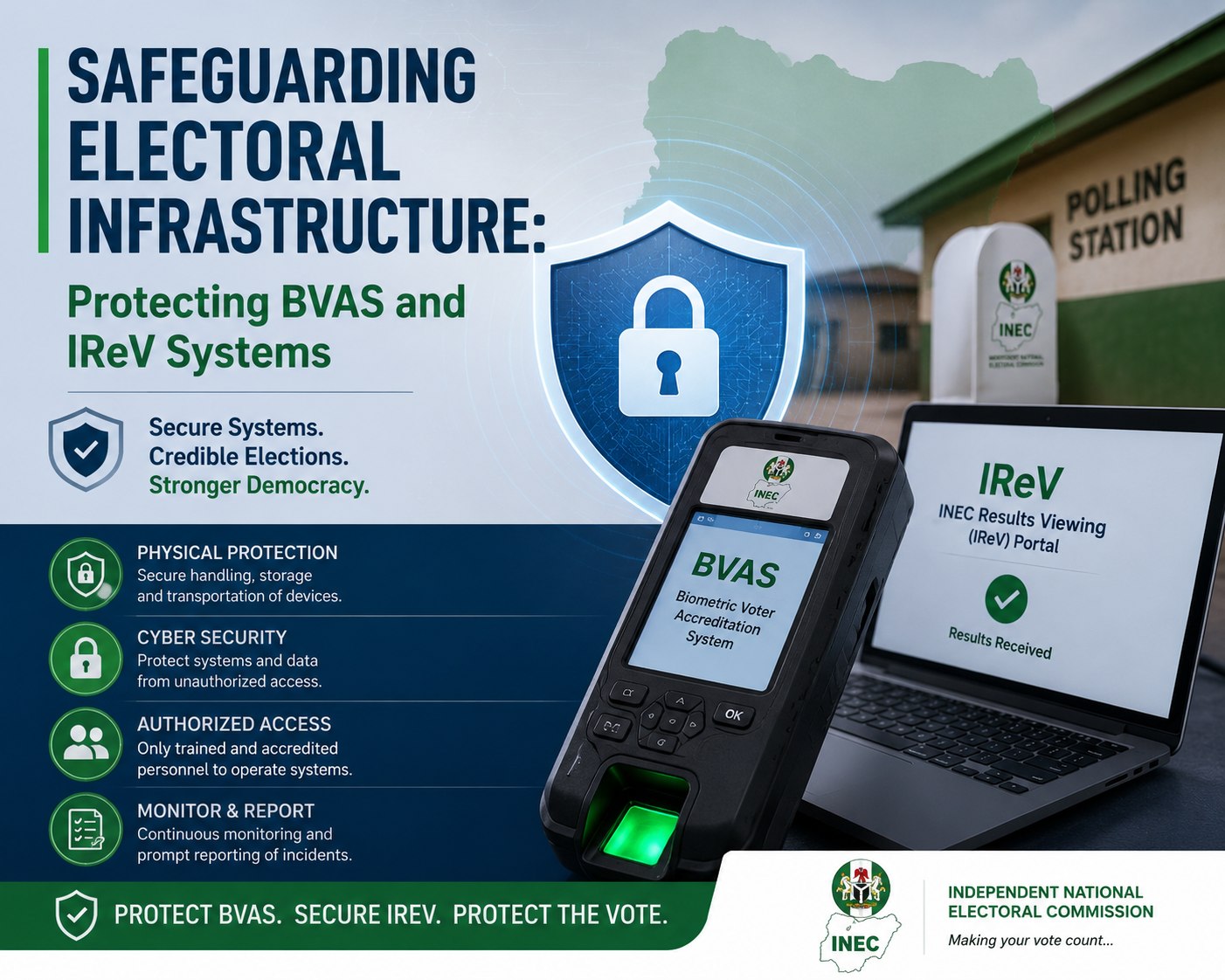
BVAS
The Bimodal Voter Accreditation System is used to verify voters through biometric authentication during elections.
IReV
The INEC Result Viewing Portal allows election results to be uploaded and viewed publicly for transparency and accountability.
Because these systems handle sensitive electoral processes, they are attractive targets for cybercriminals and threat actors seeking to disrupt elections or spread confusion.
This is why safeguarding electoral infrastructure remains a critical national security issue.
The Growing Threat to Electoral Infrastructure
Cyber threats against election systems are becoming more advanced and coordinated. Attackers may target electoral infrastructure to disrupt services, manipulate public perception, or weaken trust in democratic institutions.
Common election-related threats include:
- Distributed Denial-of-Service (DDoS) attacks
- Unauthorized access attempts
- Bot-driven traffic attacks
- Disinformation campaigns
- Malware and phishing attacks
- Attempts to disrupt result collation systems
These threats can affect both operational stability and public confidence during elections.
Why IReV Is a Major Target
The INEC Result Viewing Portal plays a key role during result collation because it provides public access to election results.
As a result, attackers may attempt to:
- Overload the portal with traffic
- Interrupt public access
- Delay result uploads
- Spread misinformation about system failures
- Exploit vulnerabilities in connected infrastructure
Because of its visibility and importance, safeguarding electoral infrastructure requires strong protection around IReV systems and supporting networks.
Cybersecurity Measures Being Implemented
To improve election security, authorities are increasing efforts to protect electoral systems and reduce cyber risks.
Cyber Hygiene Training
Election staff are receiving cybersecurity awareness and cyber hygiene training to improve security practices and reduce human error.
Monitoring Bot Activity
Collaboration with telecommunications providers helps identify suspicious traffic patterns and coordinated bot activity.
System Monitoring and Threat Detection
Continuous monitoring improves the ability to detect unusual behavior and respond quickly to incidents.
Access Control and Authentication
Restricting system access helps reduce unauthorized activity and insider risks.
Together, these measures strengthen resilience against attacks targeting electoral infrastructure.
The Importance of Public Trust
Challenges in Securing Election Systems
Despite ongoing improvements, several challenges remain.
- Increasing sophistication of cyberattacks
- High public visibility of election systems
- Legacy infrastructure vulnerabilities
- Rapid spread of disinformation online
- Dependence on digital connectivity and telecom networks
As attackers continue evolving their tactics, safeguarding electoral infrastructure will require continuous adaptation and investment.
Conclusion
Safeguarding electoral infrastructure is becoming increasingly important as BVAS and IReV systems remain critical to transparent and credible elections. With cyberattacks targeting election technologies more aggressively, protecting electoral platforms from disruption and manipulation is essential.
Through cybersecurity training, threat monitoring, and stronger system protections, election authorities can improve resilience and maintain public trust in the democratic process.
Key Takeaways
- BVAS and IReV systems are major election technology targets
- Cyberattacks can disrupt result collation and public access
- Bot activity and DDoS attacks remain key concerns
- Cyber hygiene training improves staff preparedness
- Strong monitoring and access controls improve election security
FAQs
1. What is BVAS?
BVAS is the Bimodal Voter Accreditation System used for voter verification during elections.
2. What is IReV?
IReV is the INEC Result Viewing Portal used for uploading and viewing election results.
3. Why are election systems targeted by cyberattacks?
Because disrupting election systems can affect public trust and election processes.
4. What is cyber hygiene training?
It involves teaching staff safe cybersecurity practices to reduce risks and human error.
5. How can election systems improve cybersecurity resilience?
Through monitoring, staff training, secure access controls, and threat detection systems.
Call to Action
Stay informed about election cybersecurity and digital risk trends.
Visit Elitechub.com for more cybersecurity insights, updates, and practical resources.
Top of Form
Bottom of Form