Introduction
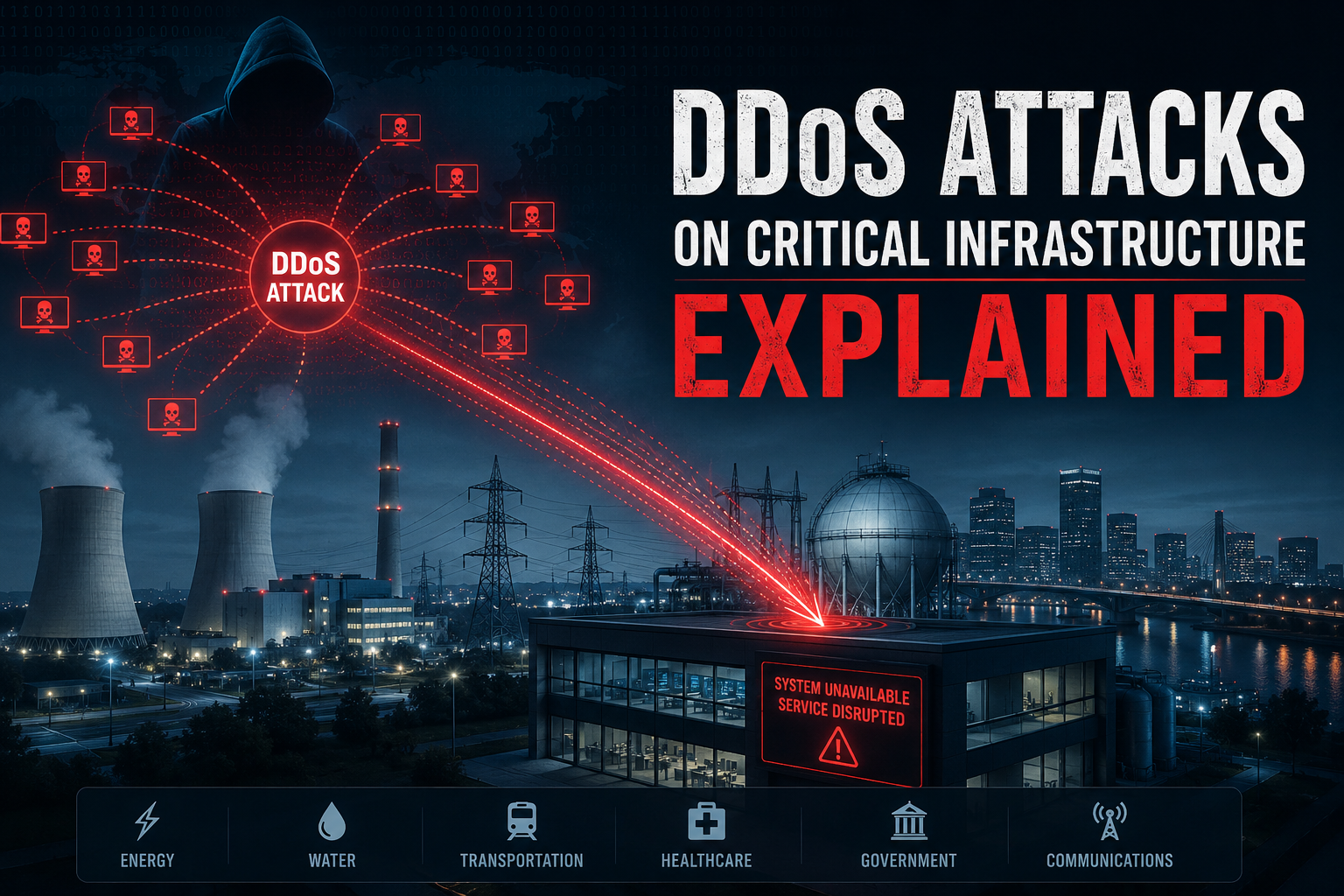
DDoS attacks on critical infrastructure are becoming a serious cybersecurity threat as attackers increasingly target essential services and public systems. From financial institutions and healthcare platforms to government networks, these attacks can disrupt operations, delay services, and weaken public trust.
Recent alerts from the Nigeria Computer Emergency Response Team warn about rising Distributed Denial-of-Service (DDoS) attacks involving botnets, amplification techniques, and known vulnerabilities. As these attacks become more coordinated and difficult to manage, both public and private sector organizations face growing pressure to strengthen their defenses.
This post explores how DDoS attacks on critical infrastructure work, why they are increasing, the risks they create, and the strategies organizations can use to improve resilience.
What is DDoS Attack?
DDoS Attack means "Distributed Denial-of-Service (DDoS) Attack" and it is a cybercrime in which the attacker floods a server with internet traffic to prevent users from accessing connected online services and sites. Similar to other cybercrimes like swatting, DDoS attacks disrupt normal operations and can cause significant harm to individuals and organizations
As DDoS attacks on critical infrastructure continue to evolve, attackers are using more advanced methods to increase impact and bypass defenses.
Why Critical Infrastructure Is a Target
Critical infrastructure includes the systems and services people rely on every day. These include:
- Power and energy systems
- Financial institutions
- Healthcare services
- Government platforms
- Telecommunications networks
- Transportation systems
When DDoS attacks on critical infrastructure target these sectors, the effects go beyond temporary downtime. Essential services may become unavailable, communication can be disrupted, and public confidence may decline.
As a result, these attacks are considered both a national security and economic risk.
How Modern DDoS Attacks Work
Modern DDoS attacks are far more sophisticated than earlier attacks. Instead of relying only on traffic volume, attackers now combine multiple techniques to increase effectiveness.
Botnet Attacks
Attackers infect devices with malware and control them remotely to generate massive amounts of traffic.
Amplification Attacks
Attackers exploit vulnerable servers to multiply traffic and overwhelm targeted systems.
Exploitation of Known Vulnerabilities
Unpatched systems and exposed services are often targeted through known CVEs and security flaws.
Together, these methods make DDoS attacks on critical infrastructure more powerful and harder to stop.
Impact of DDoS Attacks on Critical Infrastructure
The impact of DDoS attacks on critical infrastructure can be severe and far-reaching.
- Service outages and downtime
- Financial losses
- Disruption of public services
- Reduced customer trust
- Delayed emergency response systems
- Operational instability
For organizations that depend heavily on digital systems, even brief disruptions can create long-term operational and reputational damage.
Why DDoS Attacks Are Increasing
Several factors are driving the rise in DDoS attacks on critical infrastructure.
First, botnets have become easier to build, access, and rent. At the same time, many organizations still rely on outdated or poorly secured systems. In addition, automated attack tools have made launching DDoS attacks faster and more affordable for cybercriminals.
As more services move online, the attack surface continues to expand, creating more opportunities for attackers.
Strategies for DDoS Resilience
Organizations must adopt proactive defenses to reduce the impact of DDoS attacks on critical infrastructure.
Traffic Monitoring
Monitor networks continuously to detect unusual traffic spikes early.
DDoS Protection Services
Use traffic filtering and mitigation solutions to reduce attack impact.
Patch Management
Fix known vulnerabilities before attackers can exploit them.
Network Redundancy
Distribute systems and resources to reduce single points of failure.
Incident Response Planning
Develop clear procedures for responding to and recovering from attacks.
Together, these strategies improve resilience and reduce downtime during DDoS incidents.
Conclusion
DDoS attacks on critical infrastructure are becoming more advanced, disruptive, and frequent. As attackers continue to exploit botnets, amplification methods, and known vulnerabilities, organizations must strengthen their defenses and improve resilience.
Protecting critical infrastructure is no longer optional. It is essential for maintaining digital stability, operational continuity, and public trust.
Key Takeaways
- DDoS attacks overwhelm systems with massive traffic
- Critical infrastructure remains a major target for attackers
- Botnets and amplification attacks increase attack scale
- Service disruptions can affect businesses and public services
- Monitoring, patching, and response planning improve resilience
FAQs
1. What are DDoS attacks?
They are attacks that flood systems or networks with traffic to disrupt services.
2. Why is critical infrastructure targeted?
Because disrupting essential services can create widespread operational and economic impact.
3. What is a botnet?
A botnet is a network of compromised devices controlled remotely by attackers.
4. How can organizations reduce DDoS risks?
Organizations can reduce risks by using monitoring tools, patching vulnerabilities, and implementing DDoS mitigation services.
5. Why are DDoS attacks increasing?
Because attack tools are more accessible, automated, and easier for attackers to use.
Call to Action
Stay informed about evolving cyber threats.
Visit Elitechub.com for more cybersecurity insights, updates, and practical guides.