Introduction
Many people still believe that cybersecurity begins and ends with a firewall. Once a firewall is in place, they assume their systems are safe. This idea is outdated. Cyber threats have evolved. Attackers no longer rely on simple methods that can be stopped at the network perimeter.
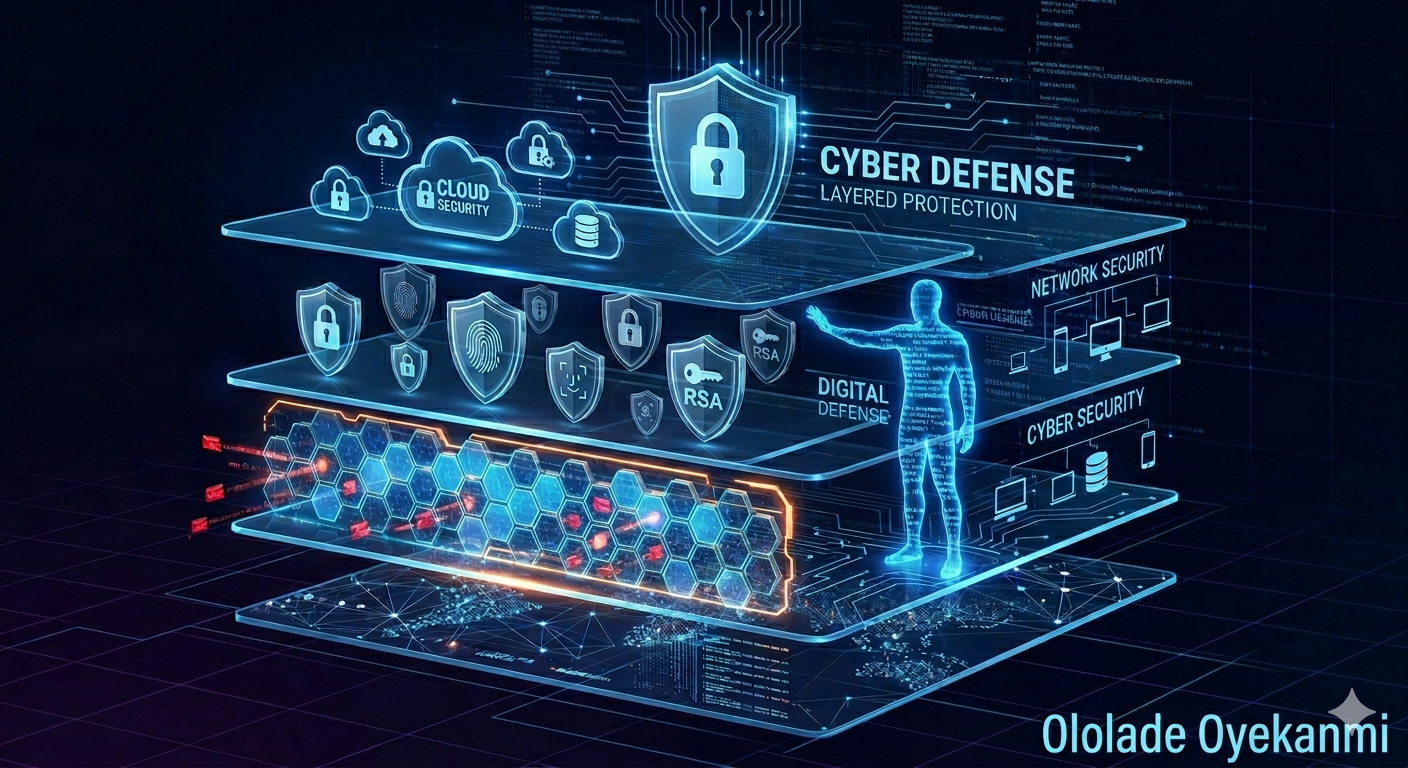
Today, they target users, devices, cloud systems, and even internal processes. This shift has made it clear that cybersecurity is no longer a single line of defense. It is a layered system. Modern cyber defense is built on multiple layers that work together to protect data, systems, and users.

Key Takeaways
v Modern cybersecurity goes beyond firewalls and requires a layered approach to be effective.
v Firewalls alone cannot stop today’s threats, especially with cloud systems and remote access.
v Strong cyber defense includes multiple layers such as network security, endpoint protection, and identity management.
v Human behavior remains a major risk, making user awareness and training essential.
v Cloud and data security are now critical due to increased reliance on online systems.
v The Zero Trust model strengthens security by requiring continuous verification of users and devices.
Why Firewalls Are No Longer Enough
Firewalls were designed to act as gatekeepers. They monitor incoming and outgoing traffic and block unauthorized access. While they are still important, they only protect the outer boundary of a network.
The problem is that many attacks no longer come through obvious entry points. Phishing emails, compromised devices, and stolen credentials allow attackers to bypass firewalls entirely. In addition, the rise of remote work and cloud computing means that users and data are no longer confined to a single network.
This has made perimeter-based security less effective on its own.
The Hidden Layers of Modern Cyber Defense
To address modern threats, organizations now rely on multiple layers of security which are as follows:
Network Security
This layer focuses on protecting the flow of data across networks. It includes tools that monitor traffic, detect suspicious activity, and block unauthorized access. Intrusion detection and prevention systems are key components here.
Endpoint Security
Every device connected to a network is a potential entry point. Laptops, smartphones, and tablets must be secured. Endpoint security uses antivirus software and advanced tools like Endpoint Detection and Response to identify and stop threats on individual devices.
Identity and Access Management (IAM)
This layer controls who can access systems and data. It ensures that only authorized users are allowed in. Methods such as multi-factor authentication and strict access controls help reduce the risk of unauthorized access. The principle of least privilege ensures that users only have access to what they need.
Cloud Security
As more organizations move to the cloud, protecting cloud environments has become essential. Many breaches today are caused by simple misconfigurations. Cloud security focuses on securing data, applications, and services hosted online.
Data Security
At the center of every system is data. Protecting it is a top priority. This layer includes encryption, secure storage, and data loss prevention strategies. Even if attackers gain access, strong data security can limit the damage.
The Human Layer
People remain one of the most targeted and vulnerable parts of any system. Phishing attacks and social engineering exploit human behavior rather than technical weaknesses. Regular training and awareness help users recognize and avoid these threats.

The Role of Zero Trust in Modern Security
A growing approach in cybersecurity is the concept of Zero Trust. This model is based on a simple idea: trust no one.
Instead of assuming that users inside a network are safe, Zero Trust requires continuous verification. Every access request is checked, regardless of where it comes from. This reduces the chances of attackers moving freely within a system.
Building a Strong Cyber Defense Strategy
Effective cybersecurity is not about relying on a single tool. It requires combining multiple layers into a unified strategy. Each layer supports the others.
Organizations must also stay proactive. Regular updates, continuous monitoring, and quick response to threats are essential. Cybersecurity is not a one-time setup. It is an ongoing process.
Frequently Asked Questions (FAQs)
1. What is modern cyber defense?
Modern cyber defense is a layered approach to protecting systems, data, and users from cyber threats. It goes beyond firewalls and includes multiple security controls working together.
2. Why are firewalls not enough anymore?
Firewalls only protect the network boundary. Today’s attacks can bypass them through phishing, stolen passwords, or compromised devices.
3. What are the main layers of cybersecurity?
The main layers include network security, endpoint security, identity management, cloud security, data security, and user awareness.
4. What is Zero Trust in simple terms?
Zero Trust means no one is trusted automatically. Every user and device must be verified before access is granted.
5. Why is human behavior important in cybersecurity?
Many attacks target people, not systems. Simple mistakes like clicking suspicious links can lead to security breaches.
Conclusion
Firewalls are still important, but they are no longer enough. Modern cyber threats require a deeper and more structured approach.
Cybersecurity today is built on layers. Network security, endpoint protection, identity management, cloud security, data protection, and user awareness all play a role. When these layers work together, they create a stronger and more resilient defense.
Understanding this is the first step toward staying secure in an increasingly complex digital world.
Call to Action (CTA)
If you are responsible for securing systems or managing digital infrastructure, now is the time to review your cybersecurity approach. Do not rely on firewalls alone. Build a layered cyber defense strategy that can withstand modern threats. For expert guidance and professional cybersecurity support, reach out to Elitechub for more enquiries.