When Machines Are Quietly Targeted: What the Latest Cyber Warnings Mean for All of Us
It doesn’t look like a crisis.
There are no sirens. No breaking news banners. No visible disruption to your day.
The lights still come on. Water still runs. Systems still work the way they should.
But somewhere in the background—far from everyday attention—something more subtle is happening.
Security agencies like the Cybersecurity and Infrastructure Security Agency (CISA) have issued warnings about groups linked to Iran targeting parts of critical infrastructure in the United States.
Not apps. Not social media. Not personal emails. Machines.
What is actually happening
To understand this, imagine the systems that keep a city running.
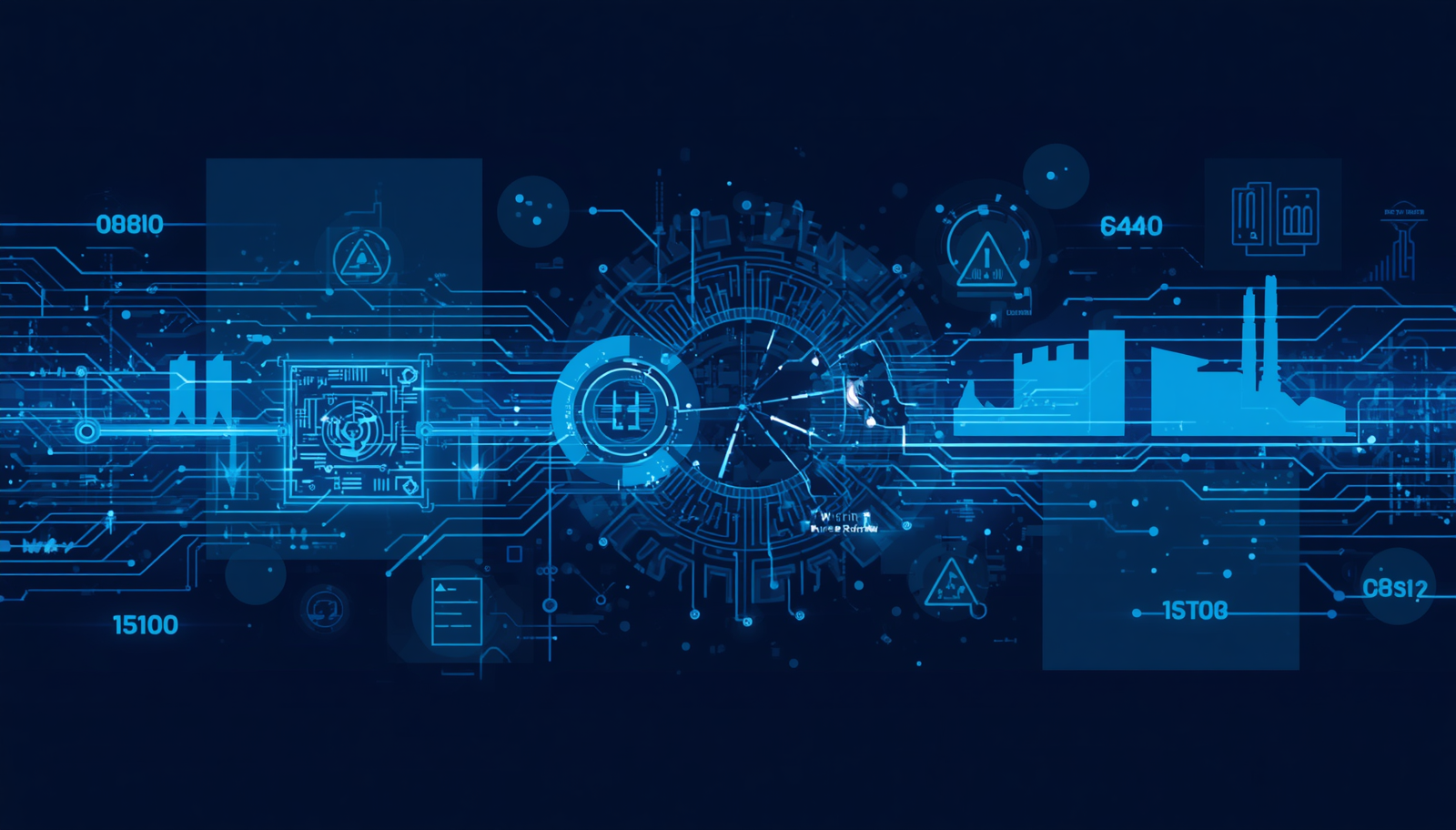
Electricity. Water supply. Manufacturing plants. Transportation systems.
Behind all of these are small but powerful devices called programmable logic controllers (PLCs). These are like the “brains” that tell machines what to do: when to turn on, when to shut down, and how to operate.
Many of these systems are built using equipment from companies like Rockwell Automation and its Allen-Bradley line.
Now, here’s the issue:
Some of these machines are connected to the internet—and not always as securely as they should be.
That means, in certain cases, someone far away could find a way to access them.
According to recent warnings, groups linked to Iran are actively trying to do exactly that—scanning for exposed systems and attempting to gain control.
Not through dramatic attacks.
But through quiet entry points.
Why this matters more than it seems
It’s easy to hear this and think, “That’s infrastructure. That’s government-level stuff.”
But the effects of infrastructure don’t stay at the top.
They move outward.
If systems like these are disrupted, the impact shows up in places people don’t expect:
- Delays or failures in essential services
- Interruptions in supply chains
- Unexpected outages or operational issues
- Increased costs passed down to everyday consumers
You might never see the system itself.
But you will feel it when something stops working the way it should.
Because modern life is built on systems that are constantly running in the background—systems most people never think about until something goes wrong.
The part that often goes unnoticed
There’s an assumption that critical systems are always tightly secured. But the reality is more complicated.
Some of these machines were designed years ago—long before constant internet connectivity became the norm. They weren’t built with today’s level of cyber threats in mind.
Over time, they became connected. Updated. Integrated into larger networks.
And in that process, gaps can appear. Not always because of negligence. Sometimes, because systems evolve faster than their security. That’s what makes them vulnerable. Not because they’re weak, but because they weren’t designed for this kind of exposure.
Quiet entry, wide impact
Unlike the kind of cyberattacks that target individuals—phishing emails, scams, and stolen passwords—this type of activity operates differently.
It doesn’t rely on someone clicking the wrong link.
It focuses on systems.
The goal isn’t always immediate disruption. Sometimes, it’s access. Observation. Positioning.
Gaining a foothold.
And once that access exists, the potential for a larger impact grows.
Not instantly. But over time.
Why this is not just a “tech issue”
At its core, this isn’t just about machines or networks. It’s about dependency. We depend on systems we don’t see:
- The electricity powering homes and businesses
- The systems managing transportation and logistics
- The infrastructure supporting communication and industry
When those systems are targeted, the risk isn’t abstract.
It becomes practical.
It affects stability. Reliability. Trust.
And while experts and organisations work to secure these systems, the situation highlights something broader:
The digital world is no longer separate from the physical one.
They are deeply connected.
The human layer still matters
Even in highly technical environments, one truth remains:
Security is not only about systems. It’s about how they are managed.
Simple factors—like outdated software, weak access controls, or exposed systems—can create openings.
And once those openings exist, they don’t stay invisible for long.
This is why agencies like CISA issue warnings—not just to inform, but to prompt action.
To close gaps before they become entry points.
There won’t always be visible signs when something important is happening in the digital space.
No alerts. No immediate consequences.
Just activity in the background.
Systems being tested. Access is being attempted. Vulnerabilities being explored.
And yet, those quiet moments often matter the most.
Because they shape what happens next.
What to take away from this
You don’t need to understand programmable logic controllers or industrial systems to understand the bigger picture.
What matters is this:
- The systems that support everyday life are more connected than ever
- That connectivity creates both convenience and risk
- And the impact of cyber activity doesn’t stay contained—it spreads outward
Most of the time, everything works as expected.
But moments like this reveal how much is happening beneath the surface.
And how important it is to keep those unseen systems secure.
Because when they fail, even quietly, the effects are rarely small.