Introduction
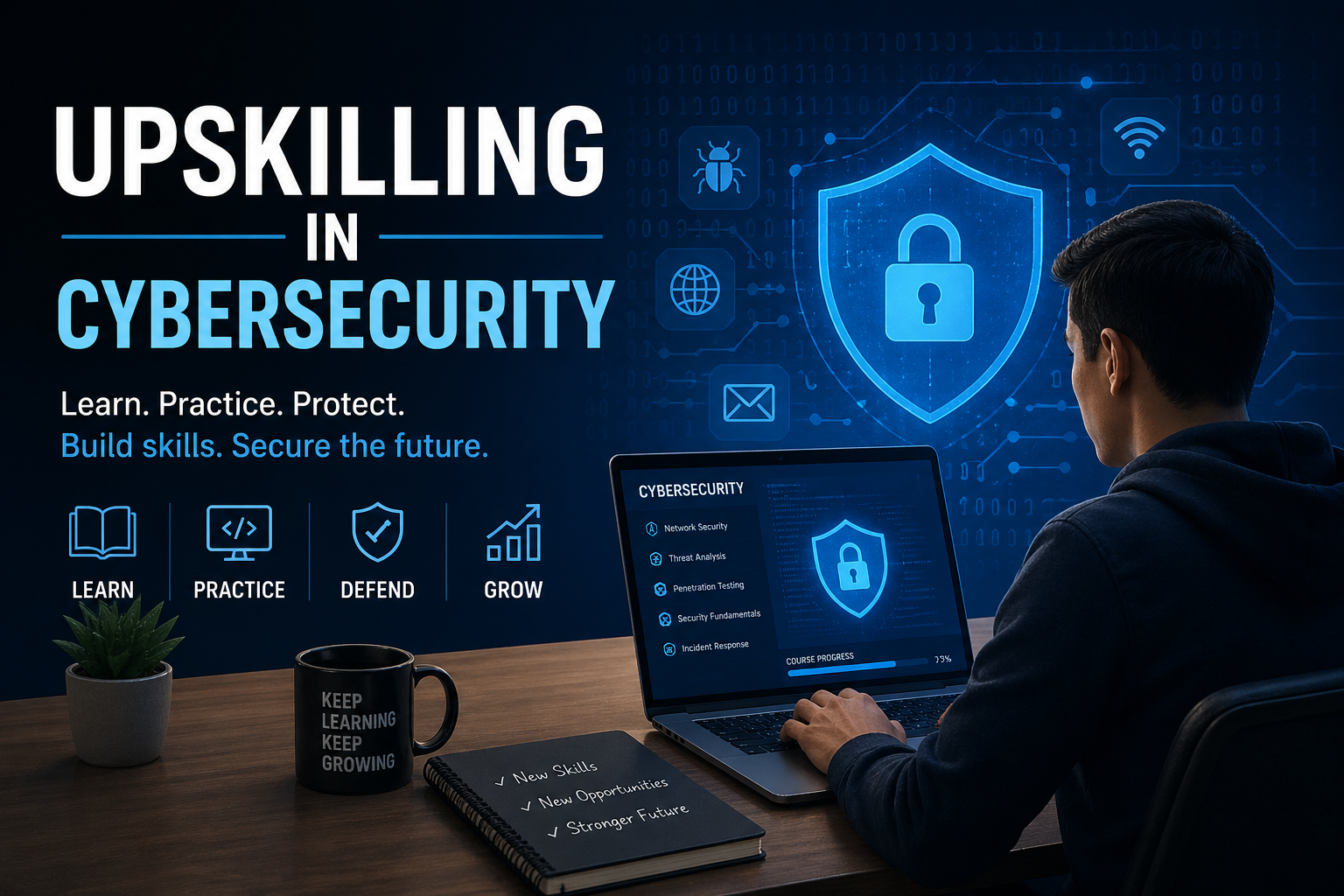
Upskilling in cybersecurity is no longer optional; it is essential for staying relevant in 2026. As cyber threats evolve and technologies like AI reshape the industry, the demand for skilled professionals continues to grow. At the same time, the gap between available talent and required skills is getting wider.
Employers are no longer focused only on degrees or certifications. Instead, they value professionals who can adapt quickly and solve real-world problems. This shift makes continuous learning a key factor in long-term career success.
In this post, you will learn why upskilling matters, which skills are in demand, and how to stay competitive in today’s cybersecurity landscape.
What Is Cybersecurity Upskilling?
Here are some different ways you can upgrade your cybersecurity skills:
For example, a security analyst might expand into cloud security, while a network engineer may transition into threat detection or incident response.
In short, upskilling helps you stay effective as both threats and technologies evolve.
Why Upskilling Matters More in 2026
Cyber threats are becoming more advanced, with attackers using automation and AI to increase their reach and efficiency. At the same time, organizations are moving more operations to the cloud and relying heavily on digital systems. This creates new vulnerabilities that require updated skills to manage.
Because of this, professionals who continue to learn and adapt are more likely to secure better roles, earn higher salaries, and remain valuable in the job market.
In-Demand Cybersecurity Skills
To succeed in 2026, focus on skills that align with current and emerging threats, such as:
Cloud Security
Securing cloud platforms and protecting sensitive data.
Threat Detection and Response
Identifying and responding to threats quickly and effectively.
AI and Security Automation
Understanding how AI is used in both attacks and defense.
Risk Management and Compliance
Assessing risks and meeting regulatory requirements.
Security Operations (SOC Skills)
Monitoring systems and managing incidents in real time.
How to Upskill Effectively
Upskilling works best when approached consistently and strategically:
- Take online courses that include hands-on practice
- Earn certifications that match your career goals
- Use labs to build real-world experience
- Stay updated on trends and emerging threats
- Join cybersecurity communities to learn and connect
When combined, these steps help build strong, practical skills.
Challenges in Upskilling
Upskilling is important, but it is not always easy. Common challenges include:
- Limited time for learning
- High cost of certifications
- Difficulty choosing the right skills
- Rapid changes in technology
Even so, overcoming these challenges is necessary to stay competitive.
Building a Future-Proof Cybersecurity Career
Cybersecurity is constantly evolving, so your skills must evolve with it. Professionals who commit to learning, adapt to change, and build practical expertise will stand out.
Upskilling is not just about keeping up; it is about staying ahead.
Conclusion
Upskilling in cybersecurity is the key to career success in 2026. As threats grow more complex and technology continues to advance, continuous learning becomes essential.
Those who invest in their skills today will be better prepared for the opportunities and challenges ahead.
Key Takeaways
- Upskilling is essential for staying relevant in cybersecurity
- The skills gap continues to increase demand for talent
- Cloud security, AI, and threat detection are in high demand
- Continuous learning improves career growth and stability
- Hands-on experience is just as important as certifications
FAQs
1. What is cybersecurity upskilling?
It is the process of learning new skills to stay current in the field.
2. Why is upskilling important in 2026?
Because cyber threats and technologies are evolving rapidly.
3. What skills are most in demand?
Cloud security, threat detection, AI, and risk management.
4. How can I start upskilling?
Take courses, earn certifications, and practice regularly.
5. Is certification necessary?
It helps, but practical skills are equally important.
Call to Action
Stay ahead in your cybersecurity career.
Visit Elitechub.com for more insights, learning resources, and expert guidance.