Introduction
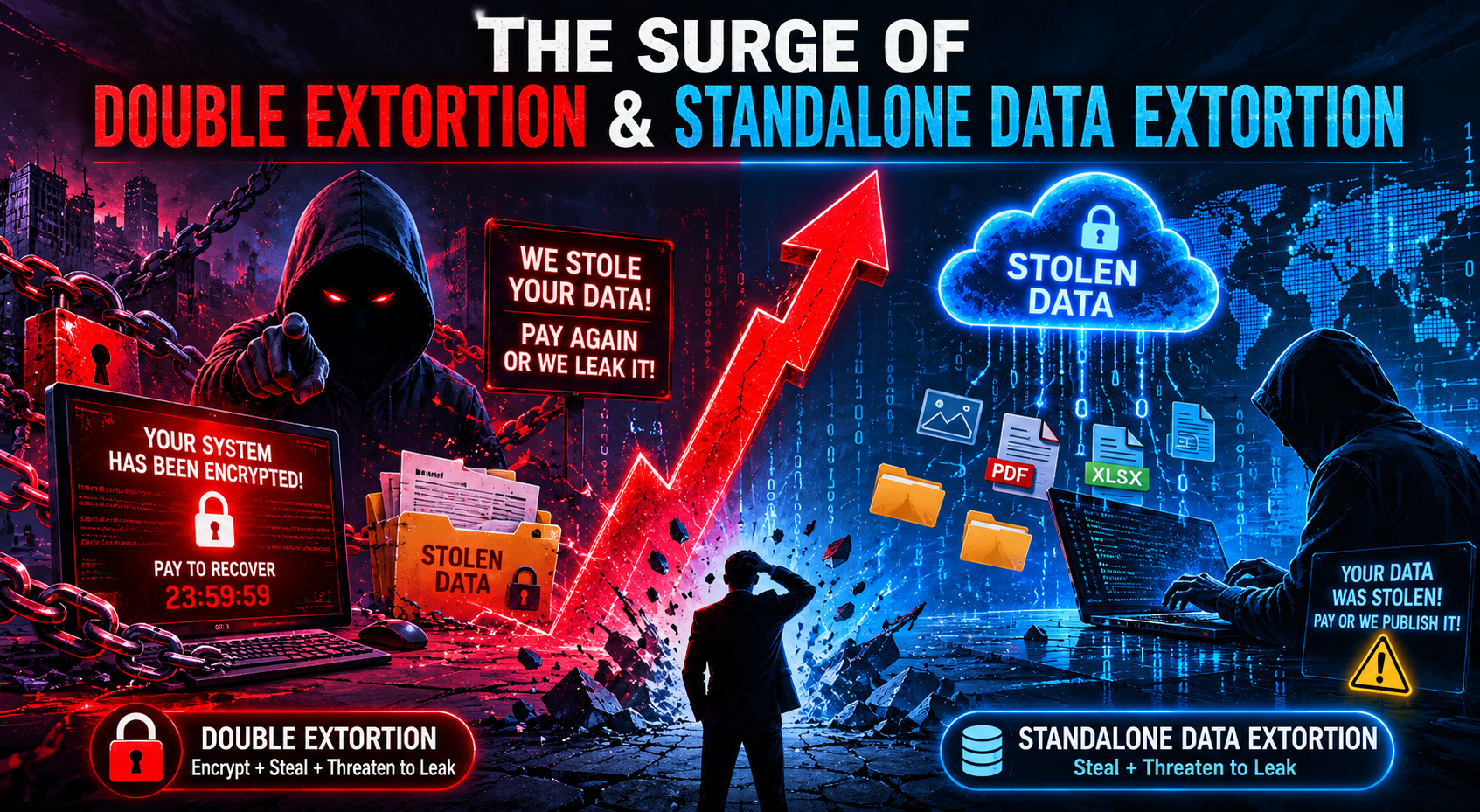
The surge of double extortion and standalone data extortion is changing the ransomware landscape and creating new challenges for organizations worldwide. Cybercriminals are no longer relying solely on encrypting files to force victims into paying ransoms. Instead, they are increasingly stealing sensitive data and threatening to expose it publicly if payment is not made.
This shift has made cyber extortion more effective and more damaging. Even organizations with strong backup systems can still face significant risks if confidential information is stolen and leaked.
As businesses continue to digitize operations and store vast amounts of sensitive data, the surge of double extortion and standalone data extortion is becoming one of the most serious cybersecurity threats facing organizations today.
This post explores how these attacks work, why they are increasing, and the strategies organizations can use to reduce their risk.
What Is Double Extortion?
After gaining access to a system, attackers typically:
- Steal sensitive information
- Encrypt files and systems
- Demand payment for decryption
- Threaten to publish stolen data if the ransom is not paid
This approach increases pressure on victims because restoring data from backups does not eliminate the risk of public exposure.
As a result, the surge of double extortion and standalone data extortion has become a major concern for organizations across multiple industries.
What Is Standalone Data Extortion?
This method is becoming increasingly popular because it is often faster, less complex, and harder to detect than traditional ransomware attacks.
Common targets include:
- Customer records
- Financial information
- Intellectual property
- Employee data
- Business contracts
- Confidential communications
Because operations may continue normally, organizations sometimes fail to detect data theft until extortion demands arrive.
Why These Attacks Are Increasing
Several factors are driving the surge of double extortion and standalone data extortion.
Improved Backup Practices
Many organizations now maintain reliable backups, making traditional ransomware less effective. Attackers have responded by focusing on stolen data instead.
High Value of Sensitive Information
Personal, financial, and business data can be used for fraud, resale, or public exposure, making it highly valuable to cybercriminals.
Growing Digital Footprints
Organizations store more data than ever before across cloud platforms, mobile devices, and connected systems.
Lower Barriers for Cybercriminals
Cybercrime services and ransomware-as-a-service models have made extortion attacks easier to launch.
These factors continue to fuel the growth of modern cyber extortion campaigns.
Industries Most at Risk
While any organization can become a victim, some sectors face higher exposure due to the sensitive information they manage.
Financial Services
Banks and fintech companies store valuable financial and customer data.
Healthcare Organizations
Medical records contain highly sensitive personal information.
Government Agencies
Public institutions manage large amounts of citizen and operational data.
Education Institutions
Universities and schools often hold extensive personal and research data.
Large Enterprises
Businesses with significant intellectual property and customer information are attractive targets.
As the surge of double extortion and standalone data extortion continues, these sectors remain high-priority targets.
The Impact on Organizations
The consequences of extortion attacks often extend far beyond the ransom demand itself.
Common impacts include:
- Financial losses
- Data breaches
- Regulatory penalties
- Reputational damage
- Customer trust issues
- Legal complications
- Operational disruption
In many cases, the exposure of sensitive information can cause more damage than system downtime.
How Organizations Can Reduce Risk
Organizations must adopt proactive security measures to defend against modern extortion attacks.
Strengthen Access Controls
Limit access to sensitive systems and data.
Implement Multi-Factor Authentication
Reduce the risk of compromised credentials.
Encrypt Sensitive Data
Protect information even if attackers gain access.
Monitor for Unusual Activity
Detect suspicious behavior before significant damage occurs.
Train Employees
Improve awareness of phishing and social engineering tactics.
Develop Incident Response Plans
Prepare for rapid containment and recovery if an attack occurs.
Together, these strategies help reduce exposure to double extortion and standalone data extortion attacks.
Why Data Protection Is Now Critical
As attackers increasingly focus on stealing information rather than simply encrypting it, data protection has become a core cybersecurity priority.
Organizations can no longer rely on backups alone. Instead, they must focus on preventing unauthorized access, securing sensitive information, and improving visibility across their digital environments.
This shift makes data security one of the most important defenses against modern extortion threats.
Conclusion
The surge of double extortion and standalone data extortion is transforming the cyber threat landscape. Attackers are increasingly targeting sensitive information and using exposure threats to pressure victims into paying.
As these attacks continue to evolve, organizations must strengthen data protection, improve monitoring, and develop comprehensive response strategies. A proactive approach is essential for reducing risk and maintaining trust in an increasingly hostile digital environment.
Key Takeaways
- Double extortion combines data theft with file encryption
- Standalone data extortion focuses solely on stolen information
- Sensitive data is becoming a primary target for cybercriminals
- Backups alone are no longer enough to reduce risk
- Strong access controls and monitoring improve resilience
FAQs
1. What is double extortion?
It is a cyberattack where attackers steal data and encrypt systems while demanding payment.
2. What is standalone data extortion?
It is an attack that focuses on stealing data and threatening to release it without encrypting files.
3. Why are these attacks increasing?
Because organizations have improved backup capabilities, prompting attackers to focus more on data theft.
4. Which industries face the highest risk?
Financial services, healthcare, government, education, and large enterprises.
5. How can organizations defend against these attacks?
By strengthening access controls, encrypting data, training employees, and monitoring systems continuously.
Call to Action
Stay informed about evolving cyber extortion threats and data protection strategies.
Visit Elitechub.com for more cybersecurity insights, updates, and practical resources.