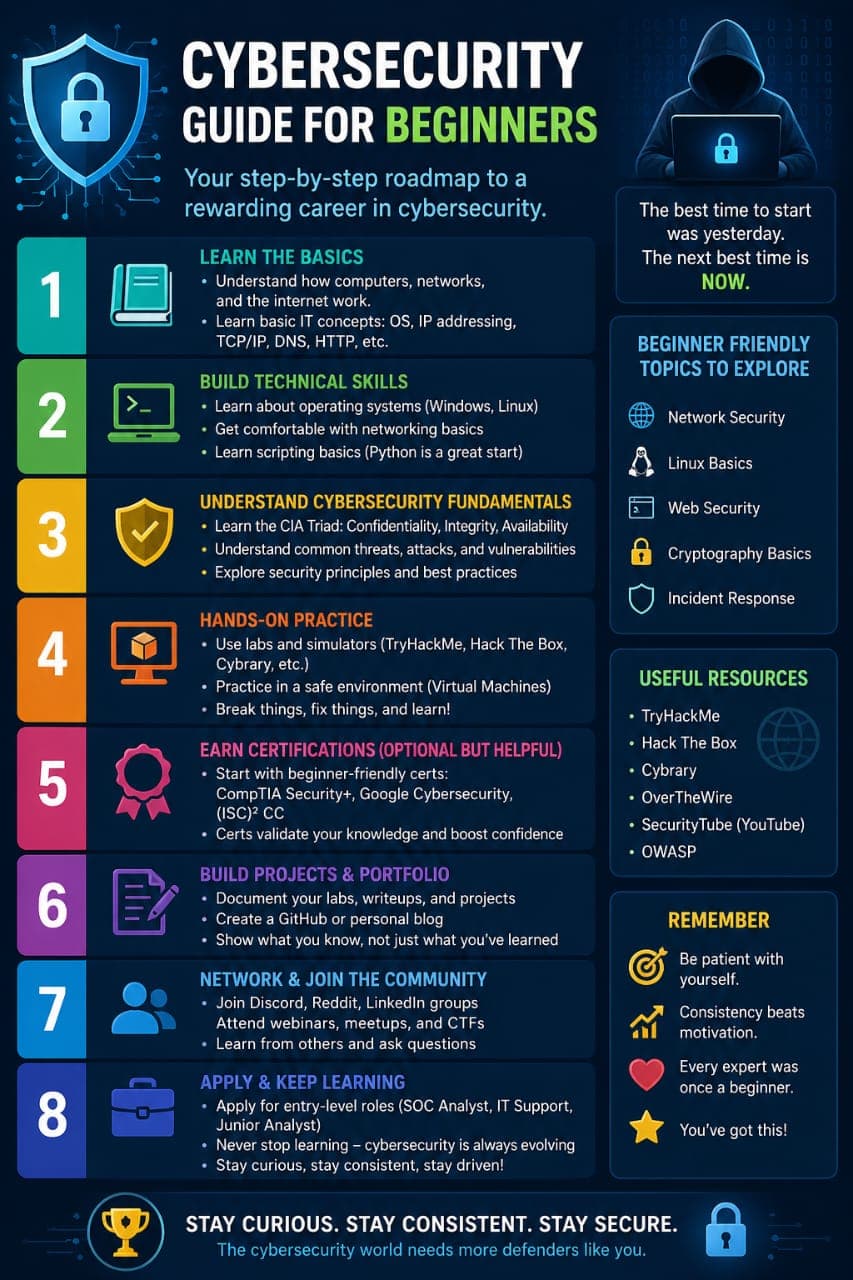
Which Cybersecurity Domain should you start with?
A 3rd-year cybersecurity student feels stuck after three years of studying mostly theory. He passed exams but still lacks practical confidence. Online advice is confusing—learn Linux, networking, ethical hacking, SOC, and more. Because of this, he keeps jumping from one topic to another without clear direction. Financial pressure is increasing, and he needs to get a job within 6–7 months. He is willing to work hard, but he truly Don't know what to start with .
If you are a beginner in this situation, The basic domain you can start with in cybersecurity today is ;
SOC Analyst is usually the best starting point because it is practical and beginner-friendly.
you are going to be working on things like;
Reading logs
Monitoring of alerts
GRC [Governance ,risk and compliance] is a good option if you prefer less technical work and enjoy documentation, policies, and compliance.
Penetration Testing is not ideal for beginners because it requires a strong technical foundation
What Skills and Tools Should You Focus On First?
Before tools, focus on understanding basic skills
1. Networking basics
Learn how data moves on the internet. Focus on TCP/IP, DNS, and HTTP. This helps you understand how devices communicate.
2. Operating systems
Get comfortable with Linux and Windows. Most cybersecurity work happens inside these systems, so you need to know how they function.
3. Basic security concepts
Understand simple ideas like threats, authentication, and encryption. These are the foundation of cybersecurity.
After that, you can move to tools:
Wireshark → helps you see and analyze network traffic
Nmap → used to scan networks and find devices or open ports
Splunk → used to collect and analyze security logs (SIEM tool)
Learning tools without understanding the basics will only lead to confusion.
How Should You Structure Your Learning (6 Months)?
Start simple and build step by step.
In Month 1–2, focus on fundamentals like networking (TCP/IP, DNS) and basic security concepts. This helps you understand how systems work before trying to secure them.
In Month 3, begin hands-on practice using tools like Wireshark and Nmap. The goal is to get comfortable, not perfect.
By Month 4, simulate real work by reviewing logs and alerts using platforms like TryHackMe or LetsDefend.
In Month 5, build practical projects such as setting up a home lab or review phishing emails. Document your work on GitHub or LinkedIn.edX
IBM: Beginners Guide to Cybersecurity | edX
In Month 6, prepare for certifications like CompTIA Security+ and start applying for entry-level roles.
Consistency matters more than perfection—steady progress will take you further than rushing through topics
Certifications That Make Sense
Start simple:
CompTIA Security+
Covers the overall cybersecurity landscape and is widely recognized
CompTIA CySA+
Focuses more on analysis and is useful if you’re targeting SOC roles
These certifications help you pass HR filters, but they won’t get you the job alone. That's why practical experience is essential.
Cybersecurity gets clearer when you choose a path. build practical skills and stay consistent.
Start today and take control of your career.