Introduction
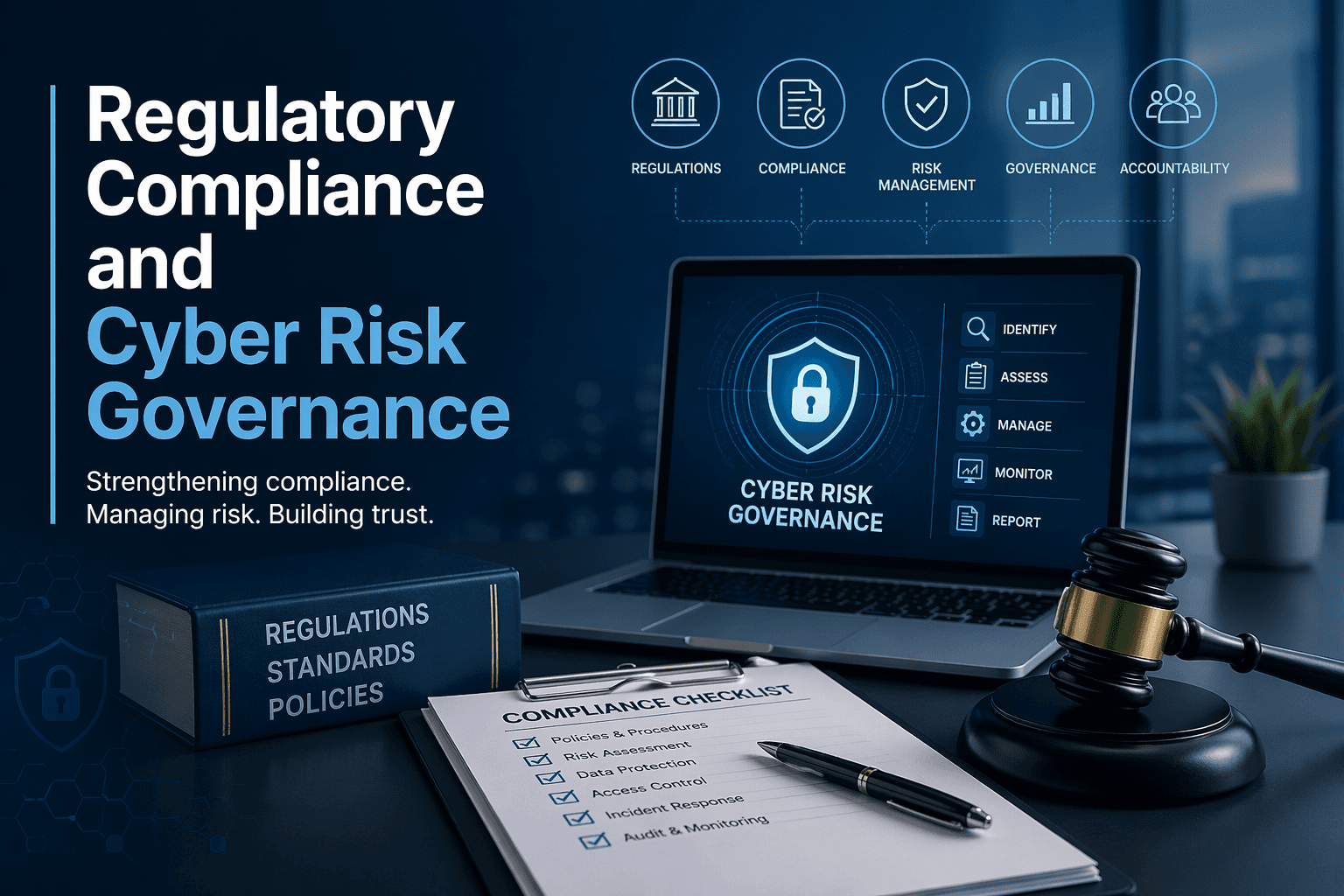
Regulatory compliance and cyber risk governance are no longer just legal requirements; they are critical to business survival. As cyber threats grow in scale and sophistication, organizations face increasing pressure to protect data, maintain trust, and meet strict regulatory standards.
Today, a single security failure can lead to financial loss, legal penalties, and reputational damage. This makes compliance more than a checkbox exercise; it is a core part of managing cyber risk.
This post explores what regulatory compliance and cyber risk governance mean, why they matter, and how organizations can build effective strategies to stay secure and compliant.
What Is Regulatory Compliance in Cybersecurity?
Regulatory compliance in cybersecurity refers to an organization’s obligation to meet specific legal, regulatory, and industry-specific cybersecurity regulatory standards that govern how data is protected and how security controls are implemented. These regulations define how organizations should handle sensitive information, manage risks, and respond to incidents.
Compliance is not just about avoiding penalties. It ensures that organizations implement baseline security controls, maintain accountability, and reduce exposure to cyber threats.
However, compliance alone does not guarantee security; it must be combined with effective cyber risk governance.
What Is Cyber Risk Governance?
Unlike compliance, which focuses on meeting external requirements, cyber risk governance focuses on internal control and strategic risk management.
Strong governance ensures that cybersecurity is aligned with business goals and that risks are continuously monitored and addressed.
The Compliance and Risk Gap
A common challenge is the gap between regulatory compliance and actual security. Many organizations focus on meeting minimum requirements but fail to address evolving threats.
Compliance frameworks are often static, while cyber risks are dynamic. This creates a situation where a company may be compliant on paper but still vulnerable in practice.
Bridging this gap requires integrating compliance into a broader cyber risk governance strategy.
Key Components of Effective Cyber Risk Governance
Regulatory compliance and cyber risk governance rely on a few critical components:
Risk Assessment
Identify and evaluate potential threats and vulnerabilities.
Policy and Controls
Establish clear security policies and enforce protective measures.
Continuous Monitoring
Track systems and detect unusual activity in real time.
Incident Response Planning
Prepare for and respond quickly to security incidents.
These elements ensure that security is proactive rather than reactive.
Common Compliance Frameworks
Organizations often align with established frameworks to guide their compliance efforts:
- ISO 27001
- NIST Cybersecurity Framework
- GDPR (for data protection and privacy)
- PCI DSS (for payment security)
These frameworks provide structured guidelines for managing cybersecurity risks and maintaining compliance.
Why Regulatory Compliance and Cyber Risk Governance Matter
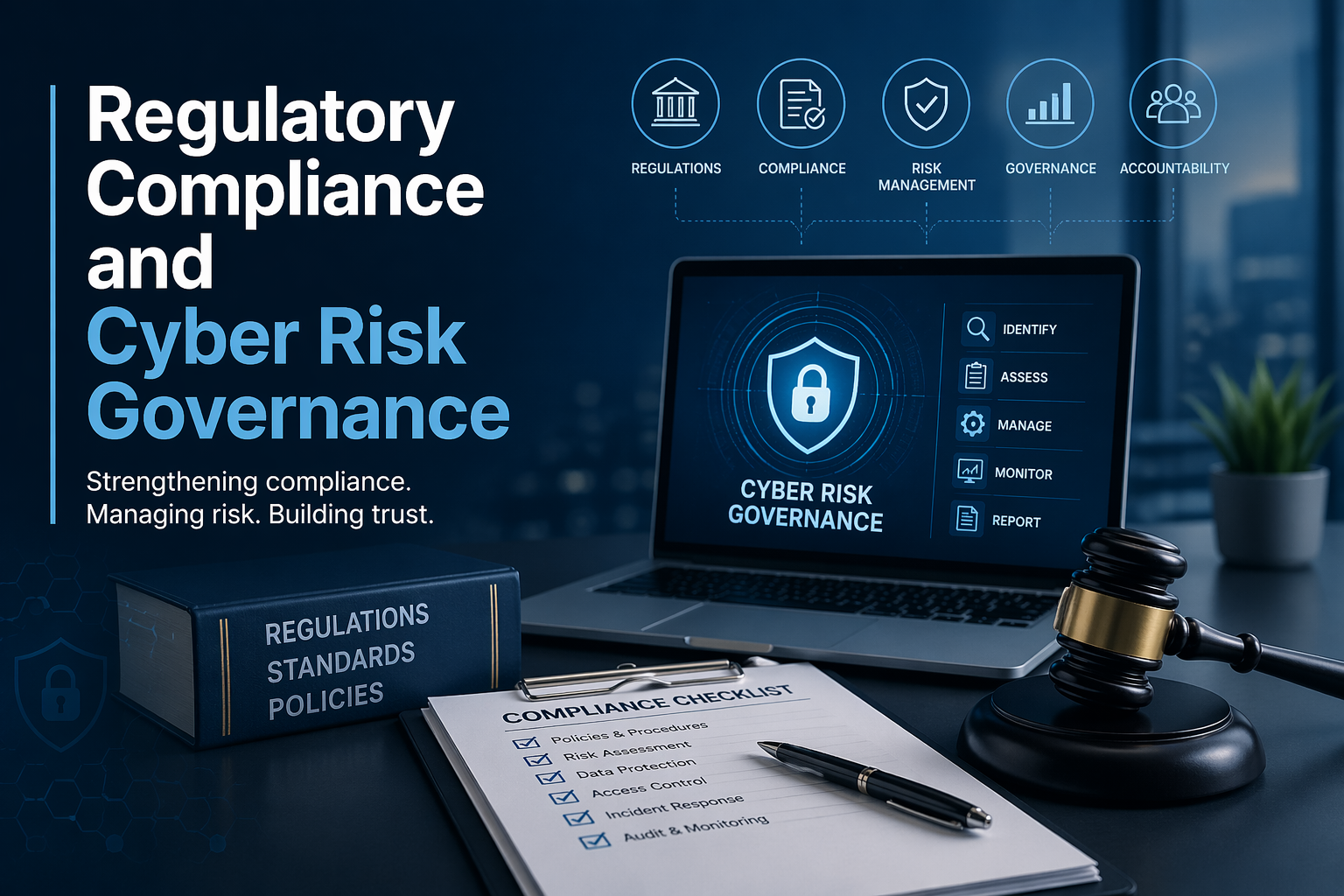
Regulatory compliance and cyber risk governance directly impact how organizations protect data, maintain trust, and operate securely.
Failure to comply can result in fines, legal action, and reputational damage. More importantly, weak governance increases the likelihood of breaches and operational disruptions.
For individuals, this means greater exposure of personal data. For businesses, it can affect revenue, customer trust, and long-term growth.
Challenges Organizations Face
Despite its importance, implementing effective compliance and governance is not easy.
Below are the challenges organizations encounter;
- Evolving regulations across regions
- Increasing complexity of IT environments
- Limited visibility into risks
- Balancing cost with security investment
These challenges make it difficult to maintain both compliance and strong security at the same time.
Best Practices for Staying Compliant and Secure
To strengthen regulatory compliance and cyber risk governance, organizations should:
- Adopt a risk-based approach to security
- Align compliance efforts with business objectives
- Implement continuous monitoring and auditing
- Train employees on security awareness
- Regularly update policies and controls
These practices help organizations stay ahead of both regulatory requirements and cyber threats.
Conclusion
Regulatory compliance and cyber risk governance are essential for managing modern cybersecurity risks. As threats continue to evolve, organizations must move beyond basic compliance and adopt proactive, risk-driven strategies.
The ability to align compliance with effective governance will determine how well organizations can protect their systems, data, and users in an increasingly complex digital environment.
Key Takeaways
- Regulatory compliance ensures adherence to security laws and standards
- Cyber risk governance focuses on managing and reducing risks
- Compliance alone is not enough to guarantee security
- A gap often exists between compliance and real protection
- Continuous monitoring and risk assessment are critical
- Strong governance aligns cybersecurity with business goals
FAQs
1. What is regulatory compliance in cybersecurity?
It is the process of following laws and standards designed to protect data and systems.
2. What is cyber risk governance?
It is the framework used to identify, assess, and manage cybersecurity risks.
3. Why is compliance important?
It helps organizations avoid penalties and implement basic security controls.
4. Is compliance enough for security?
No, organizations must combine compliance with active risk management.
5. What are common compliance frameworks?
Examples include ISO 27001, NIST, GDPR, and PCI DSS.
6. What challenges do organizations face?
Evolving regulations, complex systems, and limited visibility into risks.
7. How can organizations improve governance?
By adopting risk-based strategies, continuous monitoring, and strong policies.
Call to Action
Stay ahead of evolving cybersecurity regulations.
Visit Elitechub.com for more insights, updates, and expert resources.