Introduction
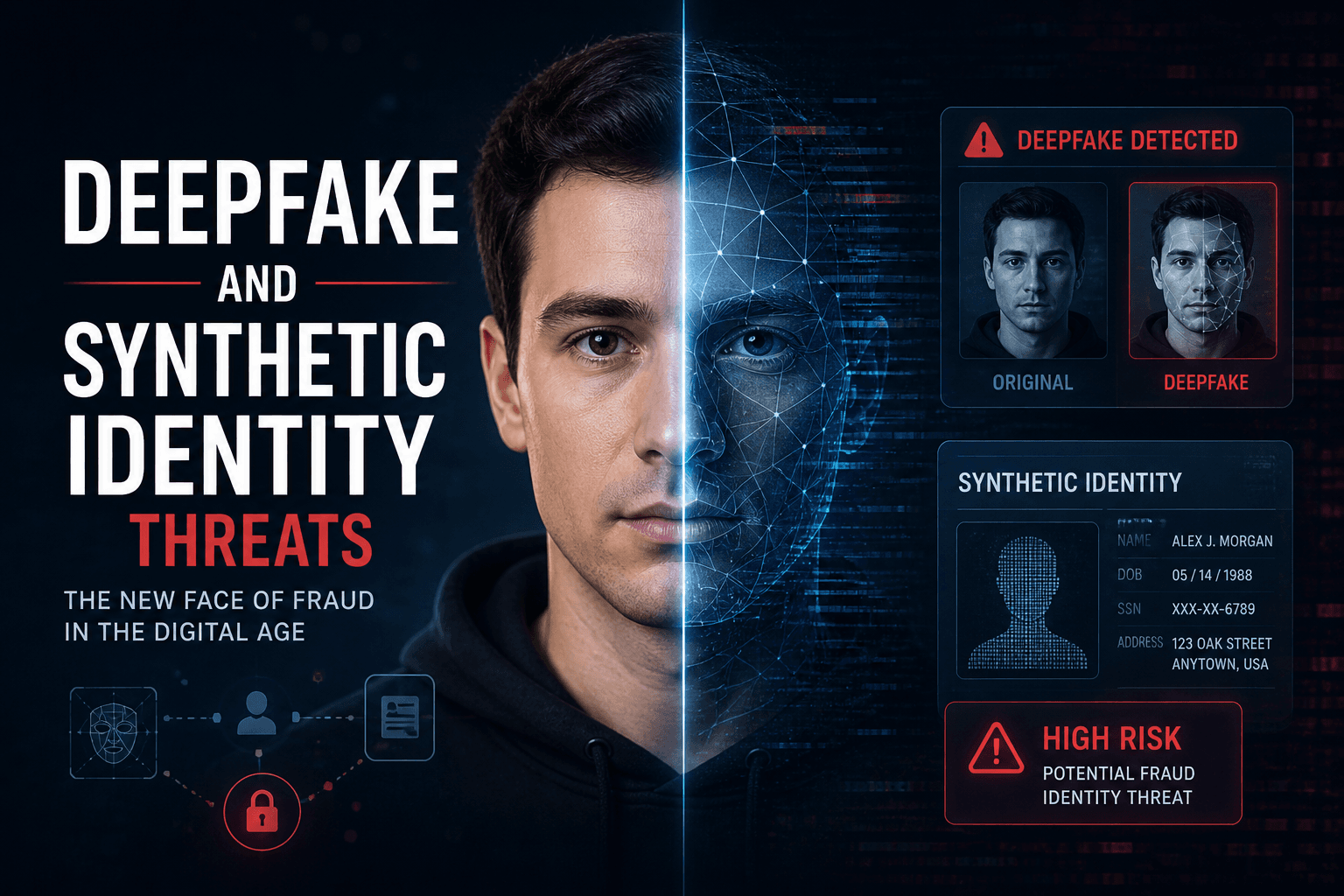
Deepfake and synthetic identity threats are reshaping digital trust. What once felt reliable; faces, voices, and identity data; can now be easily generated or manipulated using AI.
As a result, fraud is becoming more advanced and harder to detect. Attackers are no longer limited to stolen passwords or phishing emails. Instead, they can impersonate real people or create entirely new identities that appear legitimate.
In this post, you will learn what deepfake and synthetic identity threats are, how they work, the risks they create, and how to defend against them.
What Are Deepfake Threats?
Because of this, deepfake and synthetic identity threats are becoming more dangerous in cybersecurity. Attackers can impersonate executives, manipulate employees, or spread misleading content.
As the technology improves, distinguishing real from fake becomes increasingly difficult.
What Are Synthetic Identity Threats?
Synthetic identity threats involve creating fake identities by combining real and fabricated information. For example, an attacker might use a real ID number with a fake name and address.
Unlike traditional identity theft, these identities often don’t belong to a real person. As a result, they are harder to detect and can remain active for long periods.
This is why deepfake and synthetic identity threats are a growing concern, especially in financial systems and digital platforms.
How These Threats Work Together
Deepfake and synthetic identity threats are often combined to make attacks more convincing. For instance, a synthetic identity can be supported by a deepfake video or voice call during verification.
This combination makes it easier to bypass security checks and build trust with targets. As a result, organizations face both visual deception and identity fraud at the same time.
Real-World Risks and Impact
The impact of deepfake and synthetic identity threats is wide-ranging and serious, they include the following:
- Financial fraud and banking scams
- Identity theft at scale
- Executive and employee impersonation
- Social engineering attacks
- Misinformation and reputational damage
These risks affect both organizations and individuals, making strong defenses essential.
Why These Threats Are Growing
Deepfake and synthetic identity threats are increasing for several reasons. First, AI tools are more accessible than ever. In addition, large amounts of personal data are available online.
At the same time, many systems still rely on weak identity verification methods. Because of this, attackers can easily exploit gaps in security.
How to Detect Deepfake and Synthetic Identity Attacks
Although detection is becoming harder, there are still signs to watch for which are highlighted as follow:
- Unusual or inconsistent video and audio behavior
- Mismatched or incomplete identity data
- Suspicious verification attempts
- Unusual account activity
Organizations are now using AI-based tools to detect these threats, but human awareness still plays a key role.
Defense Strategies Against These Threats
To reduce risk, organizations must take a layered approach to defending against deepfake and synthetic identity threats.
Multi-factor authentication (MFA)
Adds an extra layer of security beyond passwords.
Advanced identity verification
Uses multiple checks to confirm user identity.
AI-based detection tools
Help identify manipulated media and fake profiles.
Employee awareness training
Reduces the success of social engineering attacks.
Strong verification processes
Ensure sensitive actions are properly validated.
Together, these strategies improve resilience against evolving threats.
Conclusion
Deepfake and synthetic identity threats are changing how trust works in the digital world. As these threats grow more advanced, both individuals and organizations must adapt.
Stronger verification, better awareness, and layered defenses are essential. In this evolving landscape, staying informed is the first step toward staying protected.
Key Takeaways
- Deepfake and synthetic identity threats are increasing rapidly
- Deepfakes manipulate audio, video, and images
- Synthetic identities combine real and fake data
- These threats are often used together in advanced attacks
- Strong verification and detection strategies are essential
FAQs
1. What are deepfake and synthetic identity threats?
They are AI-driven threats that involve fake media and fabricated identities used for fraud and impersonation.
2. Why are these threats increasing?
Because AI tools are more accessible and identity systems are often weak.
3. How are these threats used in attacks?
For impersonation, fraud, and bypassing verification systems.
4. Can deepfakes be detected?
Yes, but detection is becoming more difficult as technology improves.
5. How can organizations protect themselves?
By using strong verification, AI detection tools, and employee training.
Call to Action
Stay informed about emerging digital threats.
Visit Elitechub.com for more cybersecurity insights, updates, and practical guides.