Introduction
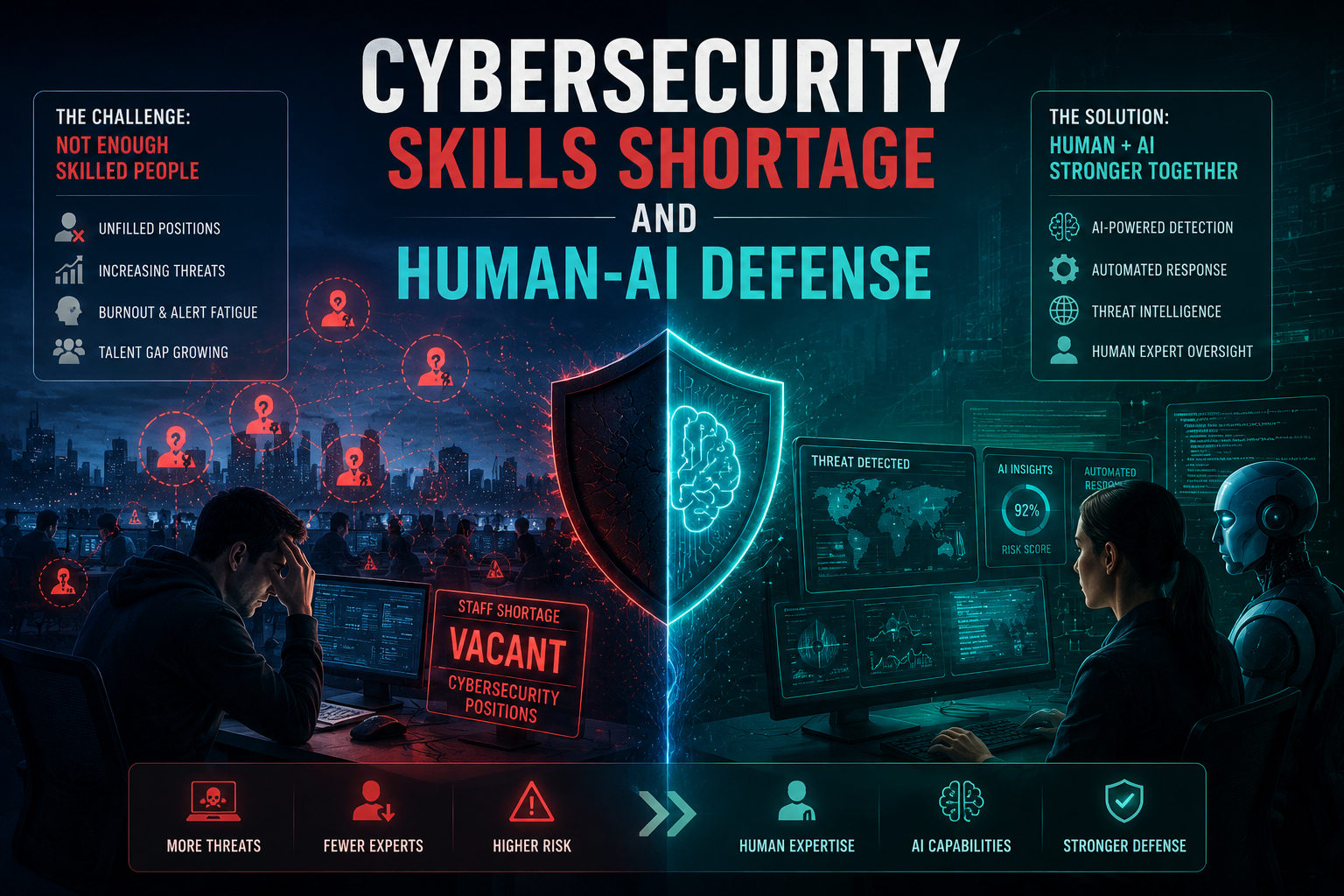
The cybersecurity skills shortage is becoming a growing challenge for organizations worldwide. As cyber threats become more advanced, the demand for skilled professionals continues to rise. However, many organizations still struggle to find and retain qualified talent.
In countries like Nigeria, the situation is made worse by the migration of skilled professionals, often referred to as “Japa.” As experienced cybersecurity experts leave for better opportunities abroad, local organizations face increasing pressure to protect systems with limited resources.
At the same time, organizations are beginning to rely more on human-AI collaboration in cybersecurity. While AI helps improve speed and detection, human expertise remains essential for analysis, decision-making, and strategic response.
This post explores the cybersecurity skills shortage, the impact of talent migration, and why human-AI collaboration is becoming critical in modern cyber defense.
Understanding the Cybersecurity Skills Shortage
The cybersecurity skills shortage refers to the gap between the growing demand for cybersecurity professionals and the limited number of skilled workers available.
As businesses expand digitally, threats continue to increase in complexity. Organizations now need specialists in cloud security, incident response, threat intelligence, governance, and AI security. However, the available workforce is still not enough to meet these demands.
Because of this shortage, many organizations struggle with delayed response times, increased workloads, and security gaps.
The Impact of Talent Migration
Talent migration continues to affect cybersecurity development in many regions. Skilled professionals often relocate in search of better salaries, stronger infrastructure, and career growth opportunities.
This migration creates several challenges:
- Reduced local cybersecurity expertise
- Increased pressure on existing teams
- Slower talent development
- Higher recruitment and training costs
As more professionals leave, organizations must invest more heavily in sustainable talent pipelines and workforce development.
Why Cybersecurity Talent Development Matters
- Continuous training programs
- Internship and mentorship opportunities
- Technical certification support
- Practical hands-on experience
- Cybersecurity education initiatives
The Rise of Human-AI Collaboration in Cybersecurity
As the cybersecurity skills shortage grows, organizations are increasingly adopting human-AI collaboration to improve defense capabilities.
AI systems can process large amounts of data, detect unusual patterns, and prioritize threats faster than humans. This helps security teams respond more efficiently and reduce alert fatigue.
However, AI alone is not enough. Human analysts are still needed to provide context, interpret complex situations, and make strategic decisions.
This is why human-AI collaboration is becoming a core part of modern cybersecurity operations.
How AI Supports Cybersecurity Teams
AI improves cybersecurity operations in several ways:
Threat Detection
AI can identify suspicious behavior and potential attacks in real time.
Alert Prioritization
AI helps security teams focus on the most critical threats first.
Automation of Repetitive Tasks
Routine monitoring and analysis can be automated to reduce workload.
Faster Incident Response
AI speeds up detection and response processes during attacks.
These capabilities help organizations manage increasing threats despite limited personnel.
Why Human Expertise Still Matters
Although AI improves efficiency, human expertise remains essential.
Cybersecurity professionals provide:
- Critical thinking and judgment
- Understanding of business context
- Ethical decision-making
- Strategic response planning
- Investigation of complex incidents
Human oversight also helps reduce false positives and prevent overreliance on automated systems.
The strongest cybersecurity strategies combine AI speed with human intelligence and experience.
Building a Sustainable Cybersecurity Workforce
To address the cybersecurity skills shortage, organizations and governments must invest in long-term workforce development.
Key strategies include:
- Expanding cybersecurity education
- Supporting local training programs
- Encouraging mentorship and internships
- Investing in research and innovation
- Creating better career opportunities locally
These efforts help build stronger cybersecurity ecosystems and reduce talent gaps over time.
Conclusion
The cybersecurity skills shortage continues to challenge organizations as cyber threats become more advanced and persistent. At the same time, talent migration is increasing pressure on already limited security teams.
Human-AI collaboration offers a practical path forward. While AI improves speed and efficiency, human expertise remains essential for judgment, strategy, and decision-making. Together, they create stronger and more adaptive cybersecurity defenses.
Key Takeaways
- The cybersecurity skills shortage is increasing globally
- Talent migration reduces local cybersecurity expertise
- Organizations must invest in sustainable talent development
- AI improves threat detection and response speed
- Human expertise remains critical for context and decision-making
- Human-AI collaboration strengthens modern cyber defense
FAQs
1. What is the cybersecurity skills shortage?
It is the gap between the demand for cybersecurity professionals and the number of skilled workers available.
2. How does talent migration affect cybersecurity?
It reduces local expertise and increases pressure on existing security teams.
3. What is human-AI collaboration in cybersecurity?
It is the use of AI tools alongside human expertise to improve cyber defense operations.
4. Can AI replace cybersecurity professionals?
No. AI supports security teams, but human judgment and strategic thinking are still essential.
5. How can organizations reduce the talent gap?
By investing in training, education, mentorship, and workforce development programs.
Call to Action
Stay updated on emerging cybersecurity trends and workforce strategies.
Visit Elitechub.com for more insights, updates, and practical cybersecurity resources.