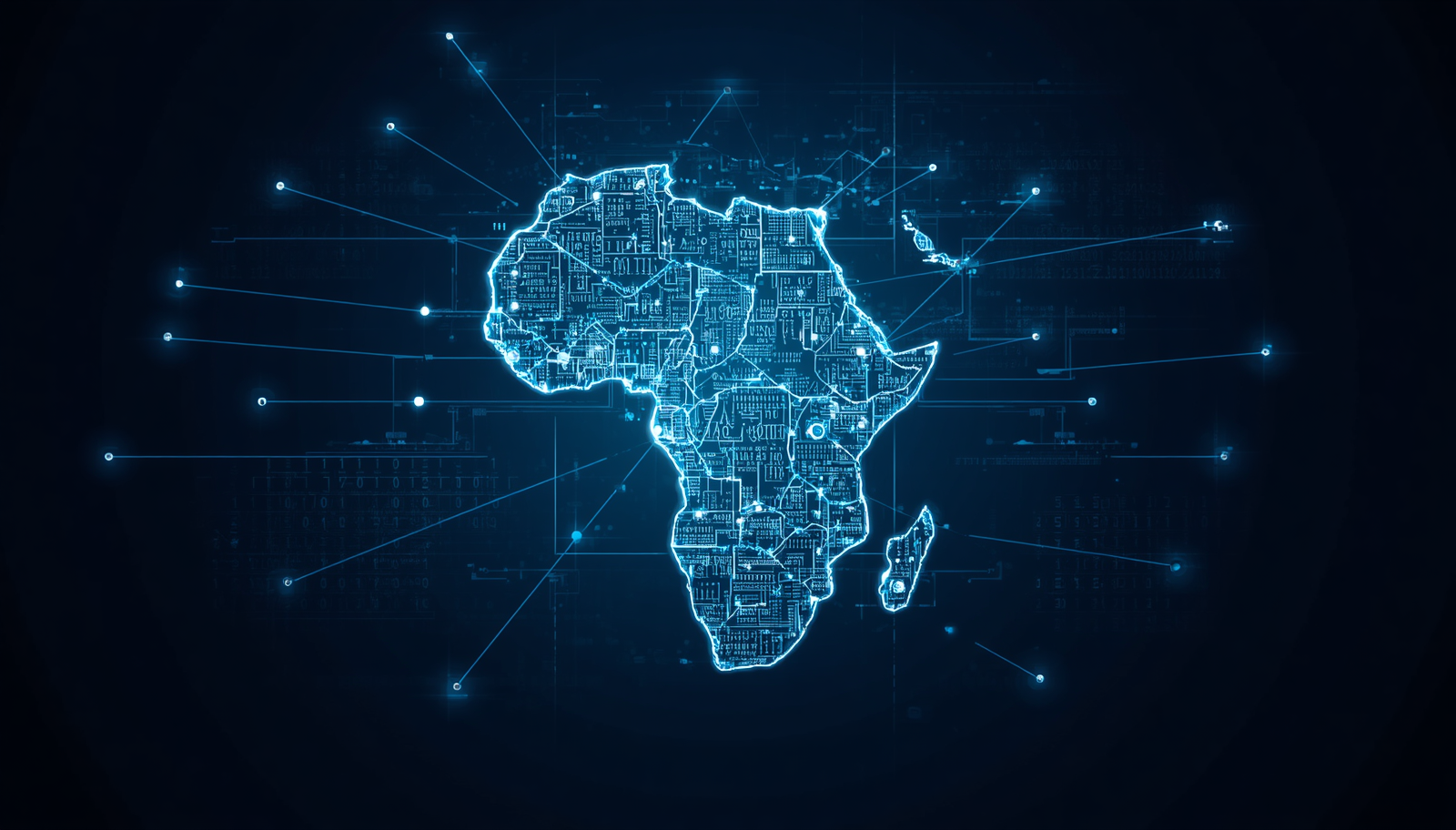
There is a quiet question sitting underneath the rise of artificial intelligence in Africa. It doesn’t trend as loudly as new apps or viral tools, but it matters far more: Who owns the intelligence shaping our future?
Right now, most of the AI tools we use—whether for writing, searching, designing, or even making decisions—are built by companies like OpenAI, Google, and Microsoft. They are powerful, efficient, and increasingly embedded in everyday life. But they are not ours. And that is where the conversation around AI sovereignty begins.
The invisible bias in “intelligent” systems
Artificial intelligence is often presented as neutral—just data, just code, just logic. But AI learns from what it is fed. And for the most part, it has been fed Western data, Western languages, and Western assumptions.
So what happens when that intelligence is applied to African realities?
It hesitates. It misunderstands. Sometimes, it gets things completely wrong.
Ask an AI tool about a local market practice, a cultural nuance, or even a name rooted in Igbo or Hausa identity, and you may notice the gap. It is not malicious. It is simply unfamiliar.
But that unfamiliarity has consequences.
Because when systems that don’t fully understand you begin to:
- recommend what you see,
- influence what you read,
- and shape decisions around you,
You are no longer just a user. You are being interpreted—often inaccurately.
When your language doesn’t exist online
For many Africans, this issue becomes even more personal with language.
We live in a continent rich with thousands of languages, yet only a fraction of them are meaningfully represented in digital systems. Voice assistants struggle. Translation tools fail. Speech recognition ignores entire accents. What does it mean for a language to exist in the modern world if it cannot be processed, understood, or preserved digitally? AI is quickly becoming the infrastructure of communication. If our languages are not included in that infrastructure, they risk being sidelined—not just culturally, but economically. Because language is not just identity. It is access.
The quiet export of power
There is also a less visible layer to this conversation: data.
Every search, every click, every interaction feeds these systems. That data is valuable. It trains models, improves accuracy, and drives innovation. But where is that data going?
More often than not, it is stored and processed outside Africa.
This creates a strange dynamic:
- We generate the data
- Others build the systems
- Others capture the value
And then we pay to use the results.
Over time, this is not just a tech issue. It becomes an economic one. A continent that consumes technology without shaping it risks falling behind in the very systems that will define the future of work, governance, and opportunity.
Why AI sovereignty is not just for tech experts
At first glance, AI sovereignty sounds like a policy discussion—something for governments, engineers, or think tanks. But it is already affecting everyday life.
It affects:
- What jobs are created—and where they are located
- How accurately systems understand your identity
- Whether your data is protected or exploited
- If your language and culture are visible in the digital world
It determines whether Africa participates in the AI economy as a creator or remains a consumer.
And that distinction matters.
Because the countries and regions that control AI today will influence global narratives tomorrow.
Building intelligence that understands us
AI sovereignty is not about rejecting global technology. It is about balance.
It is about asking:
- Can we build systems that understand African languages natively?
- Can we train models on local data that reflect our realities?
- Can we host and manage our own digital infrastructure?
Across the continent, early efforts are already emerging—developers working on local language models, startups building context-aware solutions, and communities pushing for digital inclusion.
But progress is uneven, and the gap is still wide.
Bridging it will require:
- investment in local talent
- collaboration between governments and the private sectors
- and a shift in mindset—from consumption to creation
The future is being trained right now
What makes this moment urgent is timing.
AI systems are not static. They are continuously learning. The data used today will shape how these systems behave tomorrow.
If African voices, languages, and realities are not included now, they may be harder to integrate later.
In other words, the future is already being trained.
The question is whether we are part of that training—or simply subjects of it.
Africa’s relationship with technology has often been reactive—adapting to systems built elsewhere and finding ways to make them work locally. AI presents a different kind of opportunity. Not just to adapt, but to define. AI sovereignty is, at its core, about ownership:
- of data
- of narrative
- of direction
It is about ensuring that as intelligence becomes embedded in every system we rely on, it does not erase us in the process. Because if we do not build systems that understand us, we will continue to live inside systems that don’t. And that is a future worth questioning—before it becomes permanent.